
Best Lithium-Ion Battery for Electric Motorcycles: A Practical Guide for Fleet and Mobility Operators
2026-03-17
When you design or operate electric scooters and motorcycles, battery choice directly affects range, uptime, and total cost of ownership. Lithium-ion battery for two-wheeler applications has become a leading choice because it combines low weight, long cycle life, and flexible charging in a package that can be monitored and controlled digitally.
Several battery technologies are in active use today, each with situations where it can make sense.
Flooded lead-acid: Common in older motorcycles and some low-cost electric scooters. These batteries are inexpensive and widely available but are heavy, need periodic maintenance, and typically deliver a limited number of charge cycles.
AGM and gel lead-acid: Sealed variants that are spill-proof and maintenance-free. AGM is often chosen for modern motorcycles that need reliable starting and moderate cost, while gel can suit specific deep-cycle or high-vibration use cases.
Nickel-Metal Hydride (NiMH): Used mainly in older electric two-wheelers and certain hybrid applications. NiMH offers better cycle life than traditional flooded lead-acid, but its energy density and cost profile are generally less favorable than lithium-ion for new designs.
Solid-state (under development): Prototypes and pilot products using solid electrolytes aim to improve safety and energy density. At this stage, they are still emerging and not yet a mainstream commercial choice for most two-wheeler fleets.
Lithium-ion (including NMC, LFP and related chemistries): Widely adopted in current electric scooters and motorcycles because it offers higher energy per kilogram than lead-acid, supports faster charging, and can be paired with advanced battery management systems.
Lithium-ion does not replace other options in every scenario, but for many new two-wheeler EV projects it provides a balanced platform for performance and lifecycle planning.
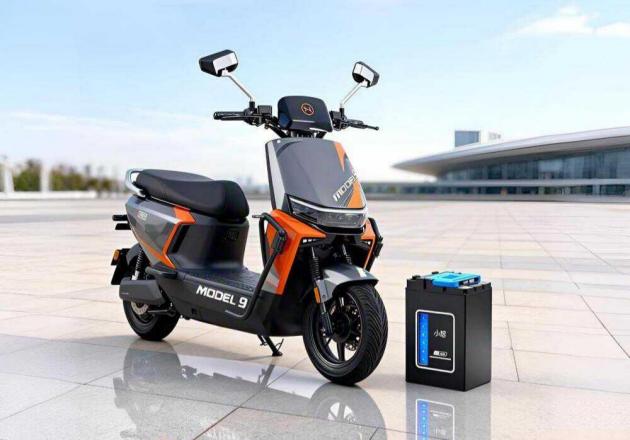
Lithium-ion's characteristics line up well with the daily realities of two-wheeler use, especially in urban environments.
Lithium-ion motorcycle and scooter batteries are typically much lighter than lead-acid units offering similar usable energy—often in the range of one-third to roughly half the weight. Reducing battery mass helps handling, low-speed balance, and braking, and it also gives OEMs more flexibility when placing packs in compact frames.
Many lithium-ion packs for powersport and two-wheeler use are specified in the range of about 1,500–3,000 charge cycles, depending on chemistry, depth of discharge, and operating conditions. Lead-acid and AGM alternatives are often rated closer to a few hundred cycles in similar conditions, so lithium can reduce the frequency of replacements over the lifetime of a vehicle.
Lithium-ion batteries generally accept higher charge currents and handle partial charges better than conventional lead-acid packs. This allows fleets to use shorter charging windows or opportunity charging, and it also supports models where charged packs are prepared in cabinets and swapped into vehicles within seconds.
Compared with many lead-acid designs, lithium-ion tends to maintain a more stable voltage over much of the discharge window, which riders experience as more consistent power delivery. Lithium-based packs also usually lose less charge when stored, making it easier to keep infrequently used or seasonal vehicles ready without constant topping up.
These traits explain why a lithium-ion battery for two-wheeler use is often chosen when range, responsiveness, and multi-year operating costs are a priority.
Different chemistries can be a better or worse fit depending on budget, usage frequency, climate, and expectations for performance.
Battery Type | Typical Strengths | Typical Limitations |
Flooded lead-acid | Low upfront cost; familiar technology; robust under basic use | Heavy; needs maintenance; shorter cycle life; slower charging |
AGM lead-acid | Sealed; maintenance-free; good vibration resistance; reliable starting | Heavier than lithium; lower energy density; shorter lifespan in frequent cycling |
Gel lead-acid | Spill-proof; good vibration and deep-cycle tolerance; low maintenance | Sensitive to improper charging; less common than AGM; lower energy density than lithium |
NiMH | Better cycle life than flooded lead-acid; no liquid acid | Lower specific energy than modern lithium-ion; limited supplier base in new two-wheeler designs |
Solid-state (early stage) | Potential for high energy density and improved safety | Limited availability; evolving costs; mainly in R&D/pilot projects |
Two-wheeler lithium-ion battery | High energy density; relatively light; fast charging; supports advanced monitoring and fleet management; long cycle life reduces replacement frequency and total cost of ownership | Higher purchase price; requires appropriate BMS and compatible charging hardware |
Instead of one "best" technology, this table highlights trade-offs: lithium-ion is often favored for frequent use and higher performance, while lead-acid and AGM can still be sensible in certain cost-sensitive or lower-utilization cases.
Once lithium-ion is selected as the chemistry family, there are still important choices to make about pack design and control.
Two-wheelers commonly use chemistries such as NMC and LFP, each with different emphasis:
NMC (Nickel Manganese Cobalt): Often chosen when higher energy density is important, for example in vehicles that need longer range or higher speeds without increasing pack size too much.
LFP (Lithium Iron Phosphate): Typically offers strong thermal stability and long cycle life, which can be valuable in high-frequency urban use or hotter climates where batteries are cycled many times per day.
Selecting between these usually starts with a clear view of average daily distance, load, climate, and required peak power.
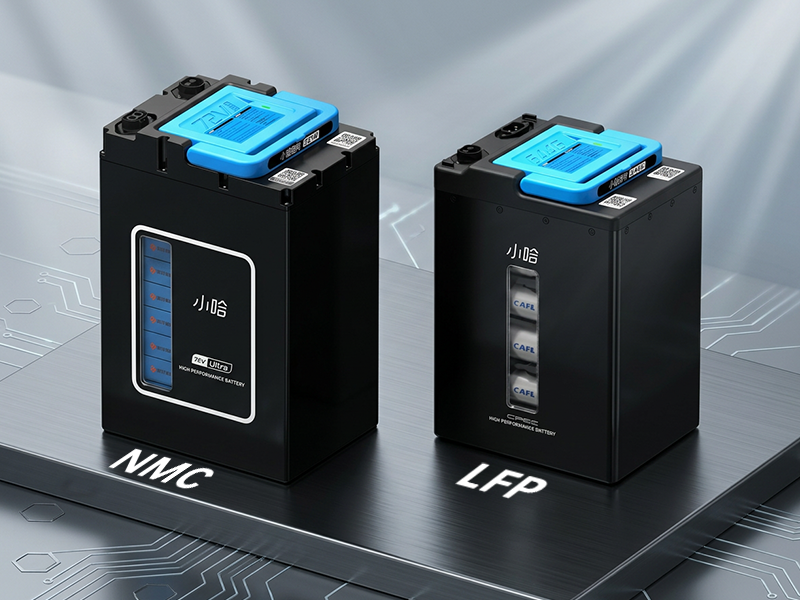
Battery voltage and capacity should match the motor, controller, and frame design:
Voltage (for example, 48 V, 60 V, 72 V): Influences torque and maximum speed ranges, as well as component compatibility.
Capacity (kWh): Determines how far the vehicle can typically travel per charge; higher capacity adds range but also cost and weight.
Engineering teams usually simulate real routes and traffic to size packs so they cover the intended duty cycle with a reasonable buffer, rather than simply maximizing capacity.
For a two-wheeler lithium battery, the Battery Management System is central to safety, reliability, and data visibility. Useful aspects to look at include:
Measurement and monitoring: Which parameters are tracked (per-cell voltage, pack current, multiple temperature points, state-of-charge, state-of-health), and how frequently they are updated.
Protection logic: How the BMS handles over-voltage, under-voltage, over-current, over-temperature, and short circuits—for example, whether it uses staged responses like derating and warnings before shut-down.
Connectivity and updates: Whether the BMS supports data communication and over-the-air (OTA) firmware updates, so algorithms and thresholds can be improved after deployment without physically disassembling vehicles.
Diagnostics support: What tools are available for service technicians and fleet operators to interpret error codes, track anomalies, and replace or inspect individual packs when needed.
A well-designed BMS helps the lithium-ion battery two-wheeler system operate within safe limits while giving operators useful insight into real-world conditions.
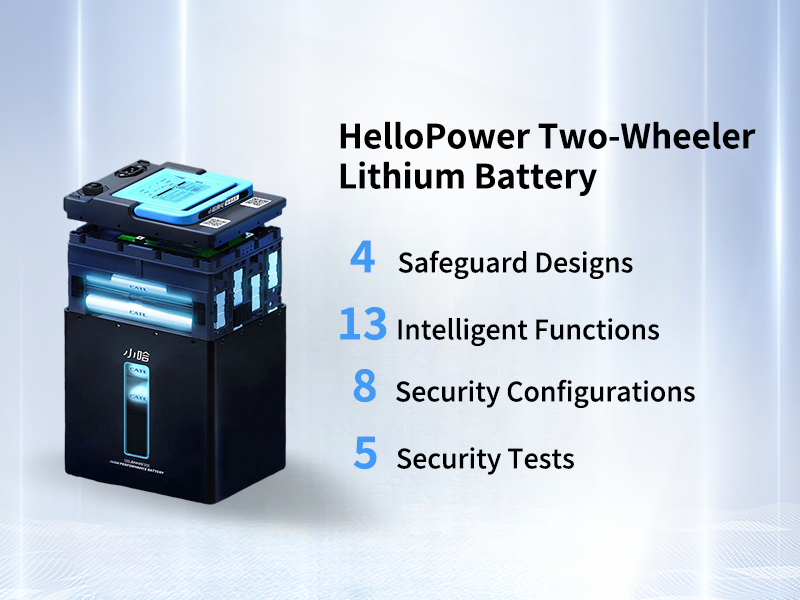
Finally, battery packs for electric scooters and motorcycles must cope with vibration, weather, and local rules:
Mechanical and environmental performance: Protection against water and dust ingress, resistance to vibration and impact, and stated operating temperature ranges are all relevant to everyday reliability.
Certification and transport: Compliance with standards such as UN 38.3 for transport and relevant electrical and safety regulations in target markets should be confirmed early in the project timeline.
Checking these factors upfront reduces surprises during type approval, logistics, or field operation.
Picking a lithium battery two-wheeler pack is one part of a broader energy decision that includes charging or swapping, monitoring, and long-term asset planning.
For fleets and OEM programs, this often means:
Aligning pack specs with a realistic plan for chargers or swap cabinets, including locations, power availability, and expected throughput.
Deciding whether batteries will be sold with vehicles, provided as a service, or financed separately to match cash-flow goals and risk tolerance.
Using data from BMS and infrastructure to refine routes, maintenance schedules, and replacement policies over time.
A clear lithium-ion strategy helps avoid fragmented decisions—such as mismatched chargers, under-specified packs, or overly aggressive cost-cutting—that can affect rider experience and financial outcomes.
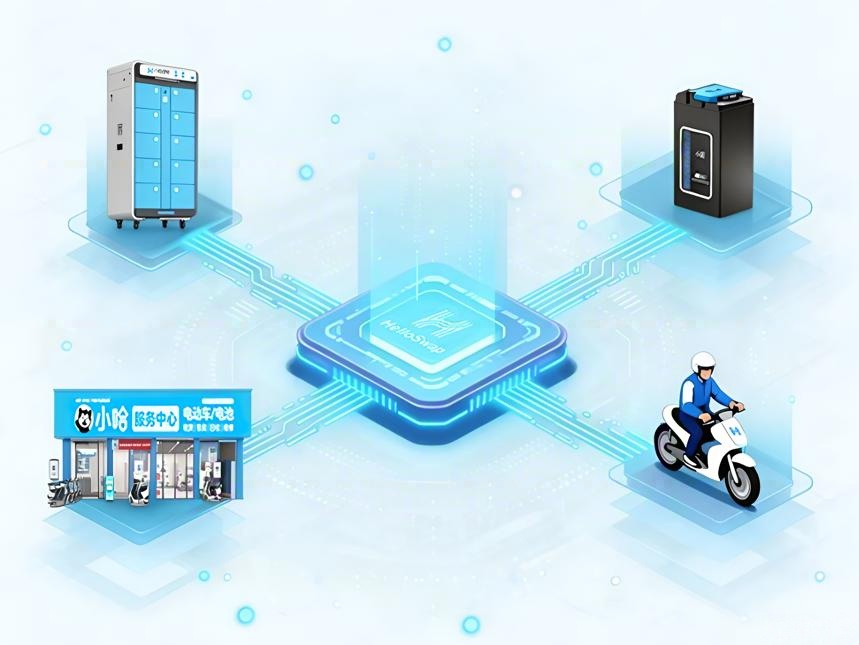
If you're planning the next generation of electric scooters or motorcycles—or scaling a two-wheeler fleet—this is a good moment to review which lithium-ion pack characteristics, BMS features, and energy models match your roadmap. For support in translating these requirements into a practical, scalable two-wheeler energy solution, contact HelloPower. Our lithium-ion battery packs, intelligent vehicles, modular swap cabinets, and digital platforms — proven across multiple cities and backed by CATL, ANT Group, and Hello Inc. — help fleets and OEMs achieve reliable, cost-efficient operations at scale.
Contact Us
hellopowerglobal@hellobike.com
Location
2F, Building 1, No.898 XiuWen Road, MinHang District, Shanghai, China
Copyright © 2024 福建宁德惠智无限科技有限公司 All Rights Reserved. 闽ICP备2023025900号-3.


