
Top 10 Lithium Battery Cell Manufacturers in the World for 2026
2026-02-10
For fleet and mobility operators, choosing the best lithium-ion battery for electric motorcycles means finding a system that stays reliable over thousands of cycles, keeps riders moving with minimal downtime, and keeps total cost of ownership (TCO) under control. Some manufacturers, including HelloPower (HelloSwap in Thailand) with its CATL-based modules, design electric motorcycle battery systems around these priorities for delivery, sharing and urban mobility fleets.
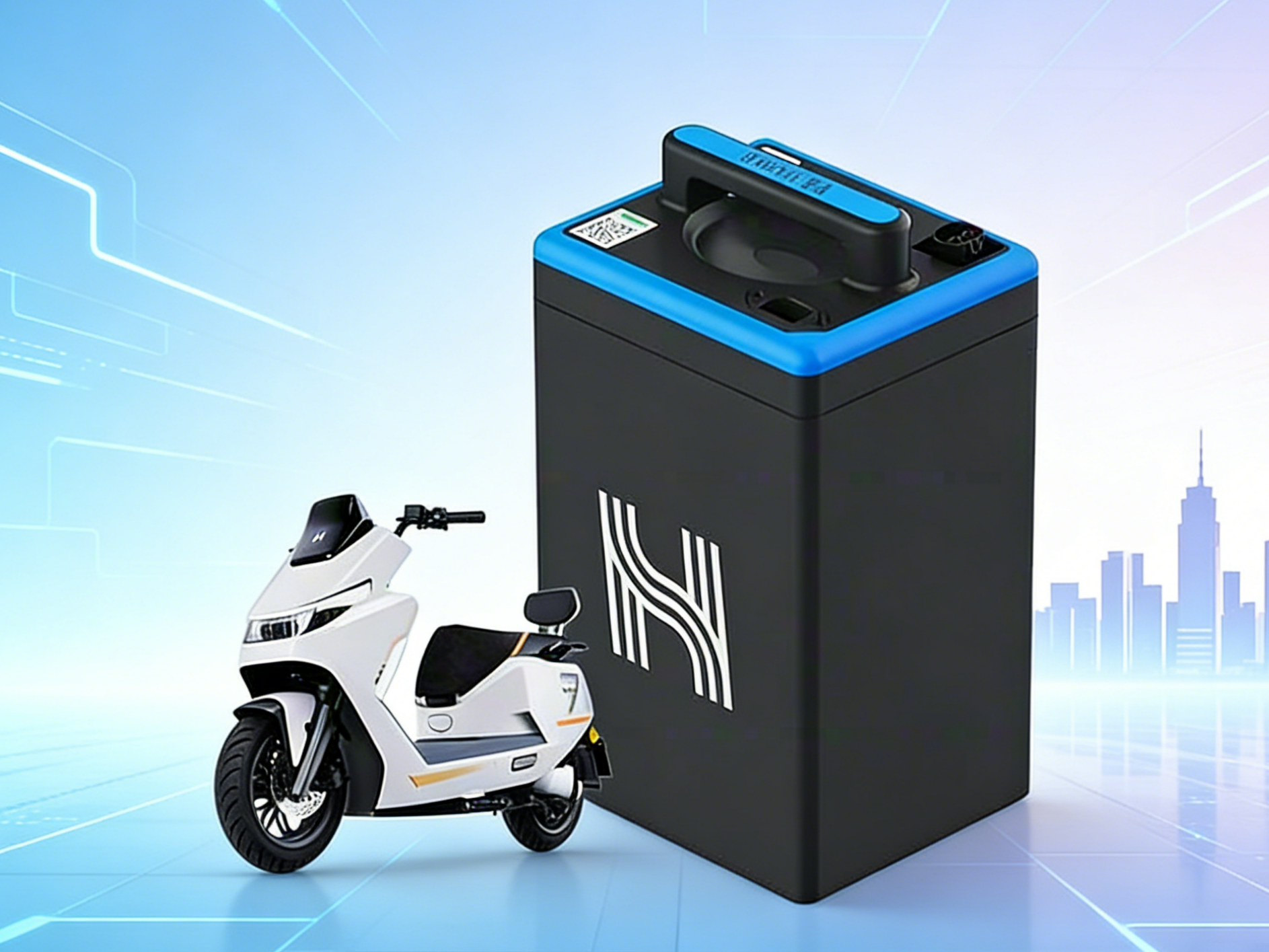
A strong lithium-ion battery for electric motorcycles starts with solid engineering fundamentals: the right chemistry, enough energy, strong safety architecture, and a service life that matches the business model. On top of that, system planners need batteries that fit their vehicles cleanly and work with their charging or swapping setup without adding hidden complexity or cost.
Key things to look at include:
Chemistry fit: How well the chemistry balances range, safety, and lifetime for your routes.
Energy density: Whether the Wh/kg and Wh/L are enough for the target range without making the bike heavy or hard to package.
Cycle life: How many usable cycles you get at your typical depth of discharge before capacity drops too far.
C-rate capability: How fast the pack can safely charge and discharge relative to its capacity, which affects acceleration and charging speed.
Safety and thermal behavior: How the battery behaves under stress and how much protection is built in at cell, pack and system levels.
Mechanical robustness: Whether the enclosure and structure are ready for real roads, not just test benches.
The right best choice for frequent, short urban trips will not necessarily look the same as the ideal pack for longer inter-city deliveries, but both are evaluated on the same fundamentals.
Most modern electric scooters and motorcycles use lithium-ion chemistry, but not all lithium-ion is the same. In general, LFP and NMC batteries dominate in today's two-wheeler applications, while NCA and LMO-based blends still appear in certain higher-performance or older designs.
LFP (Lithium Iron Phosphate): LFP is known for very good thermal stability, a relatively flat discharge curve, and long cycle life, with a lower nominal cell voltage of around 3.2 V versus roughly 3.6–3.7 V for many NMC cells. It is generally tolerant of frequent cycling but tends to lose more power and charging performance in cold climates, which matters for operators running in low-temperature regions.
NMC (Nickel Manganese Cobalt): NMC offers higher energy density, so you can get more range from a pack of the same weight and size. Packs using NMC may require more careful thermal management depending on power demand and charging strategy, especially at higher C-rates and in warm environments.
NCA and LMO-based blends: NCA (Nickel Cobalt Aluminum Oxide) is used in some premium electric motorcycles where every extra Wh/kg counts, while NMC/LMO (Lithium Manganese Oxide) blends show up in a number of legacy or specialized platforms. They are less common today in mainstream two-wheeler fleets than LFP and NMC but remain relevant in specific segments.
Many swap-based networks lean toward LFP because its cycle life and thermal stability line up well with intensive cycling and close station spacing. NMC continues to be a strong choice where extended range per module or tight packaging is the top priority.
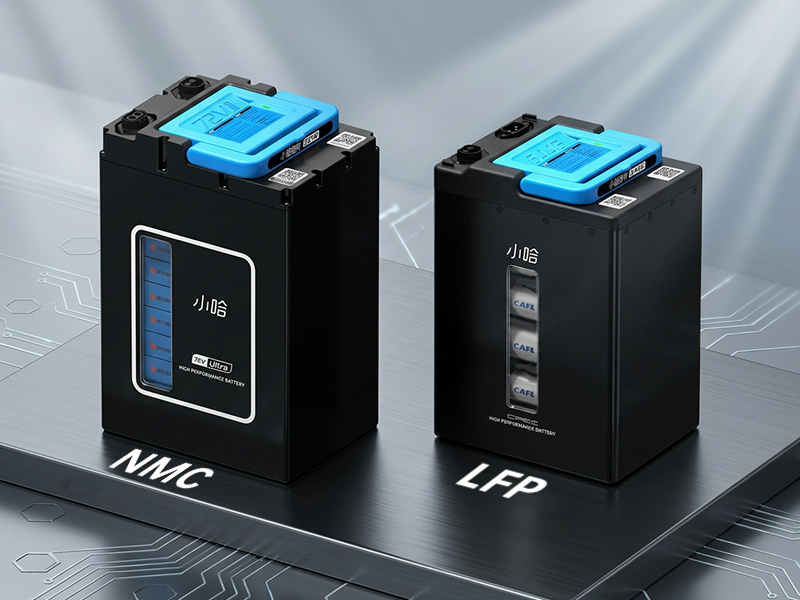
Once you know the chemistry, the next step is to look at the key performance metrics that separate stronger packs from weaker ones.
Energy density (Wh/kg and Wh/L) strongly influences both range and handling.
Higher energy density gives longer range or smaller packs for the same energy, which helps packaging and can make bikes feel lighter and more agile.
Lower energy density chemistries, such as LFP, add weight for the same kWh but offer gains in safety, stability and cycle life that can outweigh the mass penalty for many city-speed fleets.
Fleet managers often compare not just maximum energy density, but the combination of density, safety envelope and realistic cycle life in their own duty cycles.
Cycle life measures how many times you can charge and discharge a pack before capacity falls to the point that it becomes uneconomical to keep in service.
LFP packs can deliver high numbers of cycles at moderate depth of discharge, making them a strong fit for high-frequency swap and delivery operations.
NMC packs can also deliver long life if they are kept within recommended voltage and temperature ranges, but are more sensitive to aggressive charging and deep cycling profiles.
A "best" battery from a business standpoint is usually the one that drives the lowest cost per delivered kWh or per kilometer over its real working life, not simply the most cycles in ideal test conditions.
C-rate describes how fast a battery is charged or discharged relative to its capacity.
For discharging, higher C-rates support stronger acceleration and steeper climbs, but with higher thermal and mechanical stress.
For charging, higher C-rates shorten charging time but can accelerate aging and may demand more careful cooling and power-supply planning.
Lower C-rates are kinder to the battery but may not keep up with intense daily schedules if the fleet depends solely on plug-in charging.
Battery swapping systems reduce pressure on charge C-rate by letting modules charge off-board under controlled conditions while riders exchange packs quickly.
Every lithium battery for electric motorcycles has a temperature window where it works best and ages more slowly.
Charging typically needs to happen within a tighter window, and must be limited or disabled at low temperatures to avoid issues such as lithium plating.
Discharging can tolerate a wider range, but sustained high temperatures speed up degradation and increase safety risk if not managed well.
Packs and battery systems should clearly specify allowable temperature ranges and provide monitoring and protection features to keep operation within those limits.
Electric motorcycle (and e-bike) batteries face exposure to rain, dust, road debris, and vibrations from potholes and curbs.
A good pack uses sturdy enclosures, secure mounting and connectors that stay reliable with vibration and daily use.
IP-rated sealing helps keep out water and dust during everyday riding and parking, which supports long-term reliability.
In swap scenarios, the pack also needs to cope with frequent handling without damaging the housing or connectors, so robust design and materials matter.
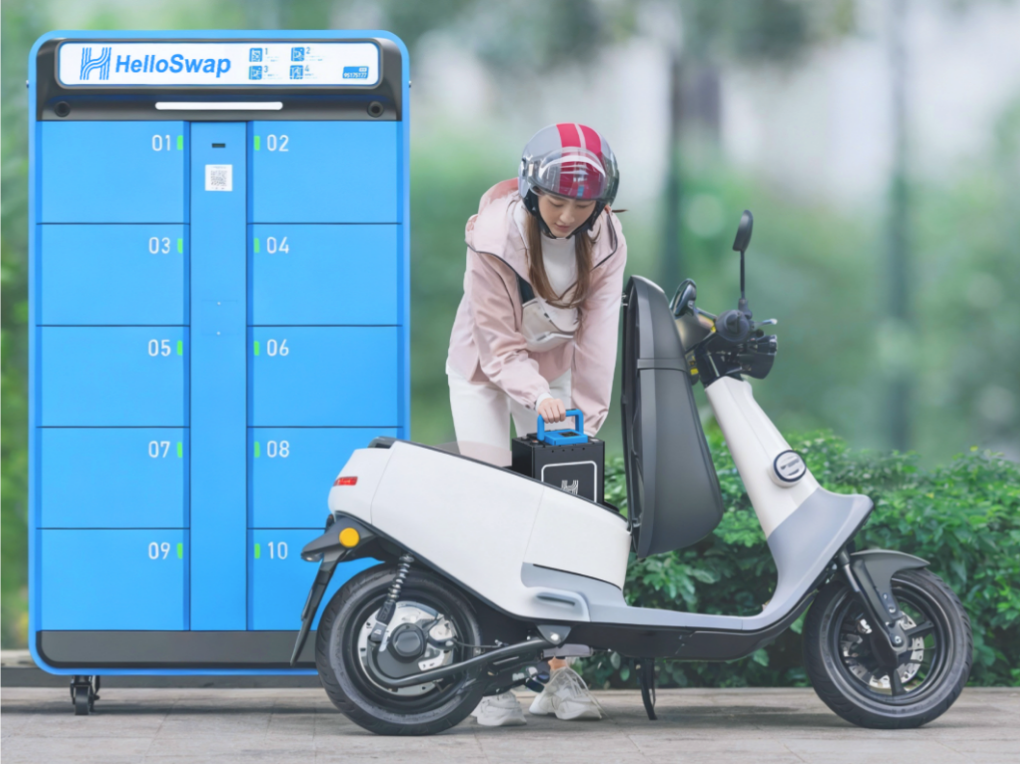
Voltage and energy choices turn those technical characteristics into real-world riding range, speed and grid demand.
Most electric scooters and motorcycles fall into a few voltage tiers:
48 V systems: Used in lighter scooters and city commuters where speeds and loads are modest.
60 V systems: Common in delivery scooters and mid-power motorcycles that need brisk acceleration and a bit more speed.
72 V systems and above: Widely used in mid-power motorcycles and logistics vehicles; some higher-performance motorcycles go beyond 72 V to supply more powerful drivetrains.
Manufacturers like HelloPower offer swappable batteries across these tiers, allowing operators to align different vehicle classes within one energy architecture.
In battery swapping networks, the basic building block is a removable module rather than a fixed pack. Many lithium-ion swap modules fall between about 1.0 kWh and 4.0 kWh per module, with smaller modules favored for lighter scooters and larger ones for higher-speed motorcycles.
Smaller modules (around 1.0–1.8 kWh) are suitable where stations are dense and riders can swap more often.
Medium modules (around 2.0–3.0 kWh) strike a balance between weight and swap frequency for a lot of urban delivery and sharing use.
Larger modules (around 3.0–4.0 kWh) fit higher-speed bikes or routes where stations are more spread out.
Vehicles may carry one or several modules depending on the platform; some systems mount two identical modules to reach the target energy while preserving flexibility. HelloPower's lineup includes, for example, a 72 V 55 Ah NMC module at about 4.0 kWh and a 72 V 40 Ah LFP module at roughly 3.0 kWh, both designed to slot directly into its swap cabinets.
An electric motorcycle battery suitable for daily operations depends as much on system electronics and design as on the cells themselves.
The Battery Management System (BMS) is the control layer that keeps cells within safe limits.
Measures cell and pack voltage and temperature.
Enforces overcharge, over-discharge and over-current limits.
Balances cells to avoid early capacity loss.
Records faults and estimates SoC and SoH to guide operations and maintenance planning.
In fleet deployments, battery systems pair these BMS protections with IoT connectivity inside the module or through the swap network, so operators can see how each pack is performing and act before issues escalate.
Good battery packs and cabinets work together to keep temperatures in the safe zone.
At the pack level, layout, materials and current limits are chosen so cells do not overheat at expected loads.
In swap networks, cabinets typically add temperature monitoring, ventilation and, in some installations, active cooling during charging to keep modules within their allowed ranges.
HelloPower's battery swapping cabinets, for instance, manage charging and monitor temperature and current at the cabinet level, helping batteries stay within the operating limits defined by their design.
The physical design of the electric motorcycle battery pack has a direct impact on reliability.
Vibration-resistant housings and reinforced structures help packs survive long-term field use.
IP-rated sealing and corrosion-resistant materials support long-term performance in outdoor conditions.
These details matter for both fixed packs and swappable modules, but are especially important where riders handle batteries multiple times per day.
These battery design principles appear in a number of commercial two-wheeler systems. HelloPower (HelloSwap), for example, applies them in its lithium-ion battery modules and supporting infrastructure.
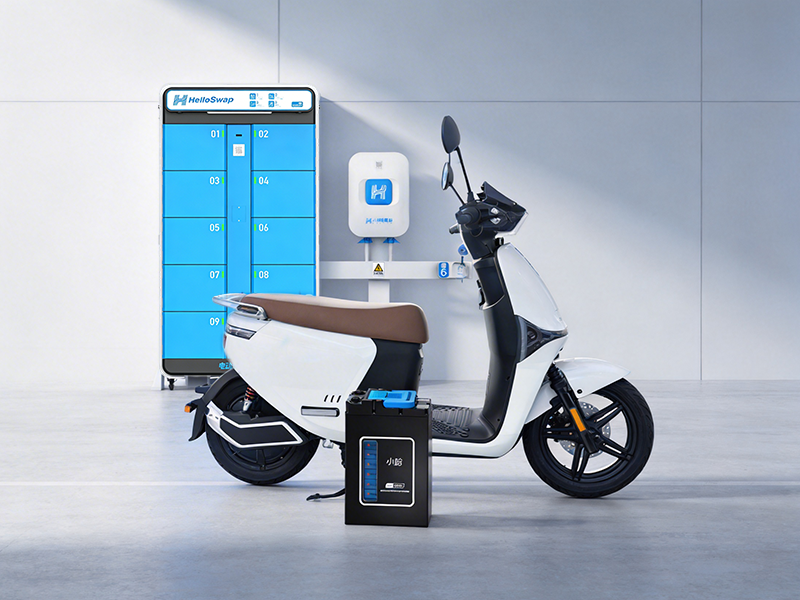
HelloPower offers LFP and NMC lithium batteries in 48 V, 60 V and 72 V for electric motorcycles and scooters.
Energy levels run from roughly 1.0 kWh up to around 4.0 kWh per module, covering city scooters through to higher-power delivery motorcycles.
Modules are built around Tier-1 cells, including CATL, with BMS and enclosures tuned for two-wheeler use and frequent cycling.
HelloPower's modular battery swap cabinets are designed for city streets, depots and mixed-use sites.
Cabinets provide 5–12 slots, run on 220 V single-phase input, and typically offer 5.5–9 kW of power to charge multiple modules in parallel.
They integrate temperature and status monitoring, ventilation, and cabinet-level safety features that align with local electrical and fire-safety codes.
HelloPower's cloud platform links batteries, cabinets and vehicles into one management view for partners.
Operators can see SoC, SoH and cycle counts, and can track swap and usage patterns by site, route or rider.
This data supports preventive maintenance based on observed degradation trends, as well as planning for expansions, tariff structures and partner contracts.
Together, these lithium-ion battery modules, swap cabinets and digital tools form a coordinated energy system that supports reliable and scalable operation for electric motorcycle fleets.
Choosing the best lithium-ion battery for electric motorcycles is only part of building a reliable two-wheeler energy system. The right combination of battery modules, charging or swap infrastructure, and data-driven fleet management can significantly reduce downtime and total operating costs.
HelloPower (HelloSwap in Thailand) provides lithium batteries, swapping cabinets, cloud management platforms, and end-to-end turnkey solutions designed for electric motorcycle fleets, delivery operators, and mobility providers. Contact HelloPower to explore battery configurations, swap network planning, and deployment options for your market.
Contact Us
hellopowerglobal@hellobike.com
Location
2F, Building 1, No.898 XiuWen Road, MinHang District, Shanghai, China
Copyright © 2024 福建宁德惠智无限科技有限公司 All Rights Reserved. 闽ICP备2023025900号-3.


