
Is Battery Swapping Actually Profitable? A Practical Guide for Operators and Investors
2026-04-22
Africa's electric two-wheeler revolution is happening on the streets, not in showrooms. For boda-boda riders and delivery fleets, the biggest barrier isn't the bike itself, but energy access: how fast they can recharge, how much it costs, and whether power is available when needed. In this context, battery swapping rather than slow plug-in charging is emerging as one of Africa's most practical models for clean mobility and rider economics.
Since late 2025, leading players such as Spiro, Ampersand, and MAX have attracted over $150 million in major disclosed financing rounds to scale electric motorcycles and battery swapping infrastructure across East and West Africa. This market map breaks down the key companies shaping Africa's battery swapping industry in 2026, alongside the models and trends defining its next phase—including how global providers like HelloPower are positioning within this evolving ecosystem.
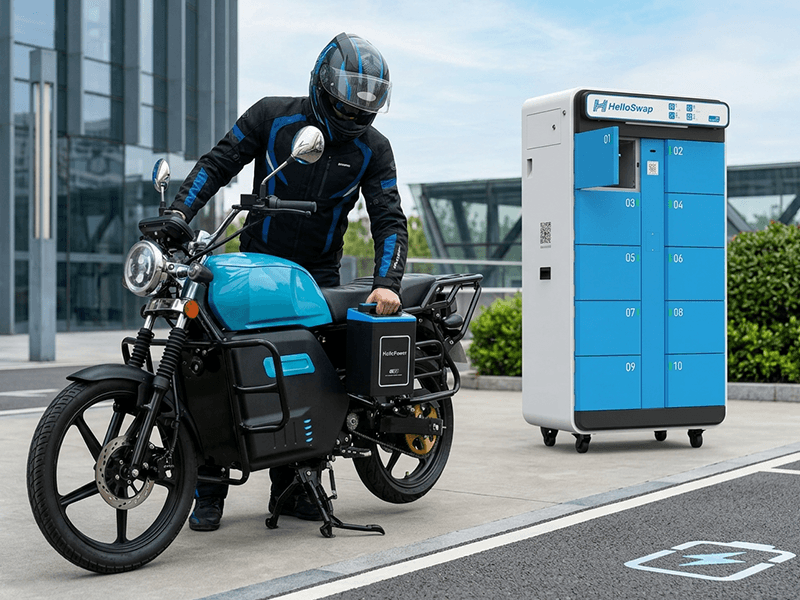
In East Africa alone, millions of boda-boda trips happen every day, with fuel often consuming 40–60% of a rider's gross income. Every hour spent queuing or charging is lost cash flow. Battery swapping flips this equation by turning energy into an on-demand service: riders swap an empty pack for a full one in under a minute and pay per use instead of buying and owning a battery.
This matters in three ways:
Downtime economics: Swapping cuts "dead time" to almost zero, keeping riders on the road and protecting daily income.
Upfront cost: Battery-as-a-Service (BaaS) removes 30–40% of vehicle acquisition cost by separating the bike from the battery, making EVs more accessible.
Energy access constraints: In cities where the grid is unreliable, operators increasingly pair swap cabinets with solar or hybrid power to ensure riders have energy even when the grid cannot keep up.
In short, for Africa's informal transport and last-mile delivery sectors, reliable energy access and minimal downtime matter more than top speed or design—and that is exactly the problem battery swapping solves.
To make sense of a fast-moving market, it helps to separate three types of players: integrated fleet operators, infrastructure-first BaaS networks, and OEMs and ecosystem enablers.
Spiro is currently Africa's largest integrated electric motorcycle and battery swapping operator. Active across Kenya, Uganda, Rwanda, Nigeria, Benin and Togo, with pilots in other markets, it has deployed more than 80,000 electric bikes and over 2,500 battery swap stations. Since late 2025, Spiro has raised at least $150 million in a mix of equity and debt—including a $100 million round in October 2025 and a $50 million facility from Afreximbank announced in February 2026—to accelerate expansion and densify its swap network. With millions of completed swaps to date, Spiro has established a leading position in Africa's EV two-wheeler market, combining BaaS with rider financing and maintenance support.
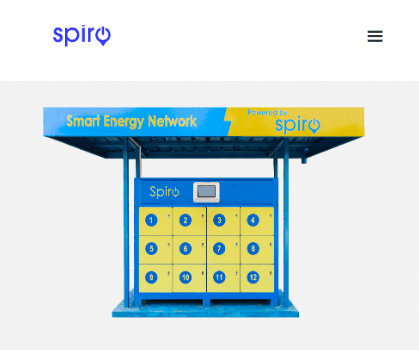
(Source: Spiro)
MAX, based in Nigeria, is a pioneer in electric mobility and energy infrastructure for two- and three-wheelers in West and Central Africa. In January 2026, MAX raised $24 million in a blended equity and debt round to scale its electric vehicle fleet, expand battery-swapping and charging infrastructure, and deepen its mobility financing products. The company focuses on Lagos and other high-density corridors, pairing e-motorcycles and three-wheelers with solar-enabled charging and swap points to cut operating costs for commercial riders. MAX's long-term ambition is to build large-scale recurring revenue from EV subscriptions and energy services rather than one-off vehicle sales.

(Source: MAX)
Zembo is a homegrown Ugandan operator combining electric motorcycle sales, battery swapping and rider financing. Operating primarily in Kampala, Zembo deploys swap stations that increasingly integrate solar generation, helping riders access reliable energy even when the local grid supply is unstable. Its model bundles the vehicle, the battery service and flexible payment plans, making it easier for boda-boda riders to transition from internal combustion bikes to electric alternatives.
(Source: Zembo)
Ampersand, based in Rwanda and Kenya, is one of the most technically advanced BaaS providers in Africa. It builds and operates a network of battery swap stations for electric motorcycles, using AI-optimized batteries and data-driven routing to keep per-kilometer costs low for riders. In late 2025, Ampersand announced that it would open its battery swap network to third-party manufacturers such as Wylex, in what multiple reports describe as the first open battery swap network for third-party electric motorcycles in Africa. Backed by new funding, Ampersand is targeting a doubled swap network and thousands more bikes across Rwanda and Kenya through 2026.
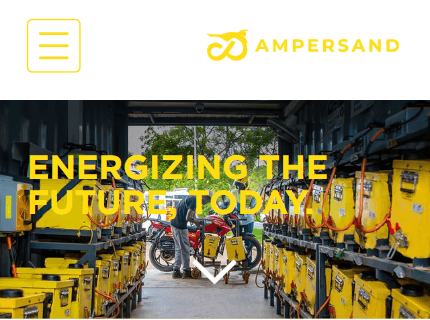
(Source: Ampersand)
ARC Ride is a Kenya-based battery-as-a-service platform focused on Nairobi's boda-boda and delivery segments. Its system uses standardized 48V open-protocol batteries and automated swap cabinets that can service multiple compatible vehicle brands. In October 2025, ARC Ride secured up to $10 million in debt financing from Mirova to deploy more than 600 battery-swapping cabinets across Kenya, significantly expanding its infrastructure footprint. By focusing on BaaS rather than owning the entire fleet, ARC Ride positions itself as the underlying energy network for multiple OEMs and fleet operators.
(Source: ARC Ride)
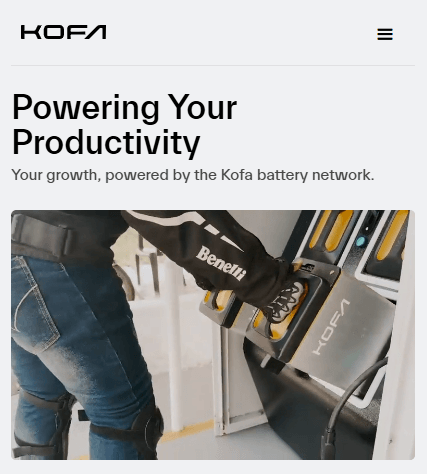
Ghana-based Kofa describes its system as a "modern energy rail" for cities: modular, high-performance batteries designed for rapid swapping and intensive commercial use. Operating from Accra with expansion into Kenya, Kofa partners with OEMs such as TailG to integrate swappable batteries into electric motorcycles aimed at delivery and taxi riders. Its "Swap & Go" model uses subscription pricing and networked swap points to give riders predictable energy costs and remove the need to own the battery asset.
(Source: Kofa)
Stima (often referred to as Stima Mobility) builds and operates battery swap networks, initially focused on Kenya's urban corridors. Its goal is to enable sub-60-second battery swaps for high-mileage commercial riders, paired with durable, business-grade electric motorcycles. Stima targets logistics fleets and professional riders that value speed of swap and predictable monthly energy bills over vehicle ownership.
(Source: Stima)
Roam is a Kenyan electric motorcycle OEM best known for its Roam Air series, designed specifically for the boda-boda market. In April 2026, Roam launched the Roam Air Gen 3, highlighting fast charging that takes the bike from 20% to 80% in under 40 minutes, significantly reducing downtime compared with traditional plug-in solutions. While Roam primarily positions itself as a fast-charging OEM, its bikes are designed to integrate into emerging charging and swapping ecosystems where compatible, giving riders flexibility in how they access energy.
(Source: Roam)
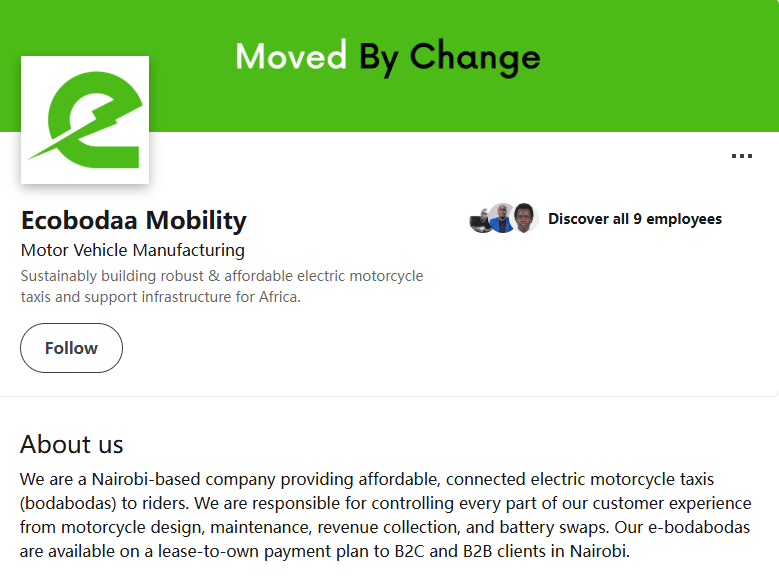
Ecobodaa is a Nairobi-based startup focused on affordable electric motorcycles and inclusive financing for boda-boda riders. Beyond its hardware and swap infrastructure, Ecobodaa has piloted a digital PAYGO platform that lets riders carry forward the value of unused battery energy when they swap, improving affordability and cashflow flexibility. By combining locally adapted bikes, swap points and fintech-style tools, Ecobodaa aims to make EV adoption viable for everyday riders who operate in a cash-constrained informal transport economy.
(Source: Ecobodaa)
Several cross-cutting trends are shaping how these companies build and finance their networks:
Boda-boda electrification leads the way: In Kenya and Uganda, the motorcycle taxi sector is at the center of the EV transition, with riders cutting daily energy costs versus petrol and improving net take-home income.
BaaS and subscription models: Battery-as-a-Service and pay-per-swap pricing are replacing the old ownership model, allowing riders to access EVs with lower upfront costs while operators earn recurring revenue from energy and services.
Solar-enabled swap hubs: From Kampala to Accra, operators are increasingly deploying solar-powered or hybrid swap stations to reduce dependency on unstable grids and lower long-term energy costs.
Early interoperability signals: Moves such as Ampersand opening its network to other manufacturers and ARC Ride's use of open-protocol batteries suggest early pressure for interoperability, even though most systems are still vertically integrated today.
China's supply-chain role: China plays a central role in the global supply chain for EV batteries, swap cabinets and two-wheeler components, and many African operators source hardware or form assembly partnerships with Chinese manufacturers to tap into that scale.
The result is a market that is still young but already rich in models and partnerships, from homegrown startups to cross-border hardware deals.
As African operators move from pilots to multi-city deployment, the challenge shifts from "Can this work?" to "Can we run this reliably at scale?" That is where global deployment experience and mature software–hardware stacks become especially valuable.
HelloPower (HelloSwap in some markets)—backed by Hello Inc., Ant Group, and CATL—operates one of China's largest two-wheeler battery swapping networks by deployment volume. Across its global network, HelloPower supports operations in 500+ cities with 80,000+ swap cabinets, 5 million batteries and 10 million operating vehicles—all managed through a cloud-based platform. Its ecosystem combines industrial-grade outdoor cabinets, high-safety lithium batteries and the AI-driven "Hello Brain" SaaS/PaaS stack for asset management, dispatch optimization and real-time safety monitoring.
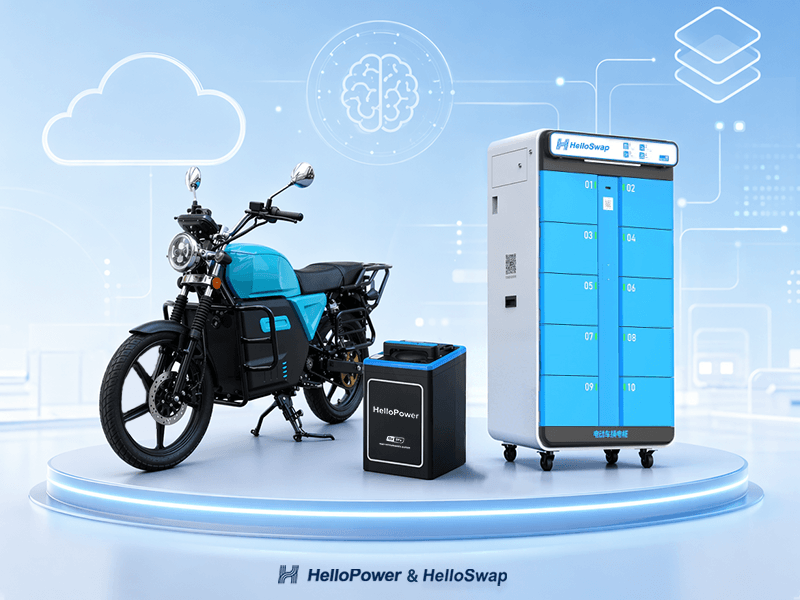
For African partners, this means they do not need to reinvent the underlying technology. Instead, they can focus on local fleet operations, financing and rider relationships, while leveraging proven swap cabinets, batteries and digital platforms from a proven global provider. HelloPower is actively exploring partnerships with African e-mobility operators, investors and distributors who want to build or scale battery swapping networks—from city-level pilots to national infrastructure—using battle-tested technology.
If you're planning or scaling an EV two-wheeler or boda-boda electrification project in Africa and want to accelerate your battery swapping rollout, HelloPower can help you design, deploy and operate the full stack—from cabinets and batteries to data platforms and operations playbooks.
Fill out the form below or visit our Business Cooperation page to reach out now and explore partnership opportunities.
Contact Us
hellopowerglobal@hellobike.com
Location
2F, Building 1, No.898 XiuWen Road, MinHang District, Shanghai, China
Copyright © 2024 福建宁德惠智无限科技有限公司 All Rights Reserved. 闽ICP备2023025900号-3.


