
Mapping Africa's Battery Swapping Industry (2026): Operators, Infrastructure & OEMs
2026-04-27
The electric two-wheeler revolution isn't just happening—it's accelerating faster than most people realize. At the center of it all is a surprisingly simple idea: Instead of waiting hours to charge a battery, you swap it out immediately and keep moving. For a delivery rider, that fast swap means not only convenience, but also more rides, more orders, and a meaningfully longer earning window every single working day. That concept, once considered a niche workaround, is now reshaping how cities, logistics companies, and mobility investors think about electric transportation worldwide.
If you've been watching the battery swapping for electric two-wheeler market, you've probably seen wildly different numbers from different research firms. Some say the market is worth a few hundred million dollars today. Others project it reaching double-digit billions by 2035. The exact figures vary, but what every source agrees on is the direction—up and fast. What matters more than any single data point is why this market is growing, where the real opportunities are, and what it takes to capture them.
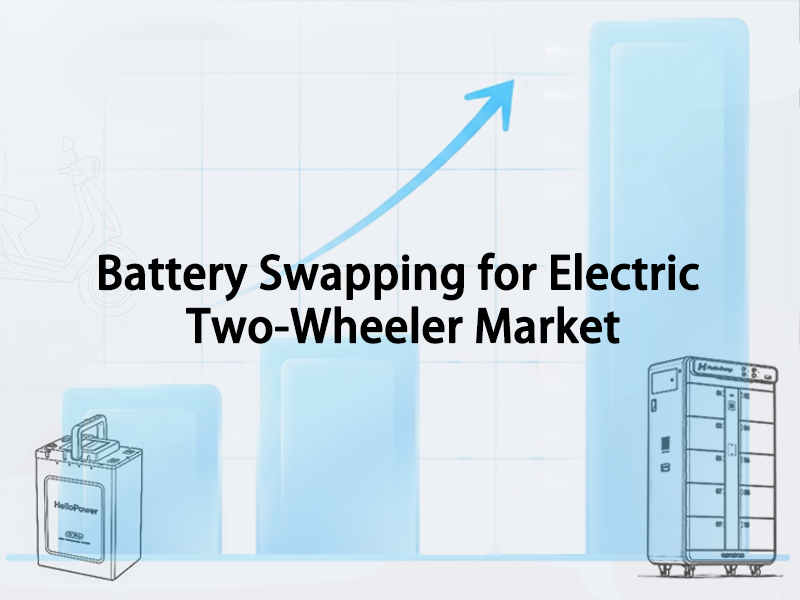
Recent estimates place the battery swapping for electric two-wheeler market between roughly USD 0.39 billion and USD 0.54 billion today, with projections ranging from around USD 1.09 billion by the early 2030s to considerably higher when broader swapping ecosystems are included. The battery swapping charging infrastructure market more broadly is expected to grow at a CAGR of approximately 24.5% through 2032. Across reports, the exact numbers differ, but the structural drivers are consistent.
The underlying demand is structural, not cyclical. Hundreds of millions of two-wheelers are on the road across Asia, with electrification accelerating rapidly. These aren't speculative future users—they're delivery riders, commuters, and gig workers who need energy solutions right now. The market is growing because the problem it solves—slow charging, range anxiety, expensive upfront battery costs—is real, daily, and urgent for a massive population of riders.
The consistent CAGR figures across research sources (ranging from roughly 18% to 25%+ for the two-wheeler-specific segment) signal one thing clearly: this is not a market to wait and see on. Infrastructure decisions made today will define competitive positions for the next decade.
Asia-Pacific dominates the current battery swapping for electric two-wheeler market landscape, accounting for roughly 45% of global market share. China is the undisputed anchor. With hundreds of millions of two-wheelers in circulation and electrification already deeply embedded in urban logistics, the country has served as the world's proving ground for battery swapping at scale. Dense urban deployments, deep integration with food delivery platforms, and progress toward standardized battery formats have turned Chinese cities into the template every other market is now studying.
Southeast Asia is where growth is most dynamic right now, driven by high motorcycle density and rapid electrification across Indonesia, Vietnam, and Thailand. Indonesia leads regionally with a fleet exceeding 112 million units and thousands of swap sites already in operation. Thailand is accelerating fast: domestic EV sales surged 80% in a single year to over 120,000 units, and both local operators and international players are racing to establish swapping infrastructure ahead of demand fully maturing.
Beyond Asia, South America is identified as the next high-growth frontier, while India's three-wheeler and last-mile delivery sectors are drawing significant swapping investment. The pattern is consistent: Wherever two-wheelers are displacing gasoline motorbikes, battery swapping follows as the preferred energy solution—particularly where public charging infrastructure remains sparse.
Fleet operators are the dominant user segment, capturing nearly 48% of market share, with delivery aggregators as the fastest-growing sub-segment within that. The logic is straightforward: a delivery rider needs every hour of their workday generating income, not waiting at a charging point. Swapping a depleted battery in under 20 seconds versus a 3–7 hour plug-in charge isn't a marginal improvement. It's an entirely different operational model.
Subscription-based service plans lead on the revenue side, reflecting a broader shift toward Battery-as-a-Service (BaaS). Under BaaS, the rider or fleet operator doesn't own the battery at all—they simply pay for the energy they use. This model lowers the upfront cost of an electric two-wheeler by as much as 30–40%, directly addressing one of the biggest adoption barriers in price-sensitive markets. Pay-per-use models are growing too, serving more casual riders who prefer flexibility over commitment.
On the battery chemistry side, lithium-ion accounts for over 73% of the two-wheeler swapping market, with LFP formulations increasingly favored for their thermal safety profile and long cycle life under high-frequency swap conditions.
For all the growth momentum, the battery swapping charging infrastructure market faces real friction. Standardization is the central bottleneck: When vehicle brands use incompatible battery form factors, a swapping network can only serve a fraction of riders on the road. This fragmentation is precisely why China, which has made the most progress on battery format alignment, has been able to build large-scale networks faster than most markets elsewhere. Solving interoperability isn't just a technical challenge—it's the unlock that determines how quickly any market reaches viable network density.
Capital requirements for swapping infrastructure are also significant. Smart cabinets, battery inventory, real-time monitoring systems, and site logistics all require coordinated investment before a network reaches operational efficiency. The most successful deployments globally have been ecosystem plays—infrastructure providers, vehicle OEMs, and logistics platforms working together—not solo build-outs.
The policy dimension matters equally. Markets with clear government support move significantly faster than those waiting for the private sector to self-organize. Operators and investors entering new markets need to assess the regulatory environment as carefully as the demand fundamentals.
Reading market forecasts is useful. Acting on them is the actual business. So what does this mean practically?
Fleet and logistics operators facing daily charging downtime have the clearest immediate ROI case for swapping—productivity gains are measurable within weeks, not quarters.
City planners and urban developers integrating EV infrastructure into new districts or mobility hubs should be thinking about swap station density from day one, not as an afterthought.
Entrepreneurs and franchise investors in Southeast Asia and South Asia are entering a market where demand is structurally proven but infrastructure density is still well below saturation—early movers build durable network advantages.
Vehicle OEMs that design for swappable battery compatibility open their products to a wider ecosystem of energy services, making them more attractive to cost-sensitive buyers.
The global picture consistently points to the same conclusion: The battery swapping for electric two-wheeler market rewards those who build dense, reliable, well-integrated networks. Not those who deploy a handful of stations and wait.
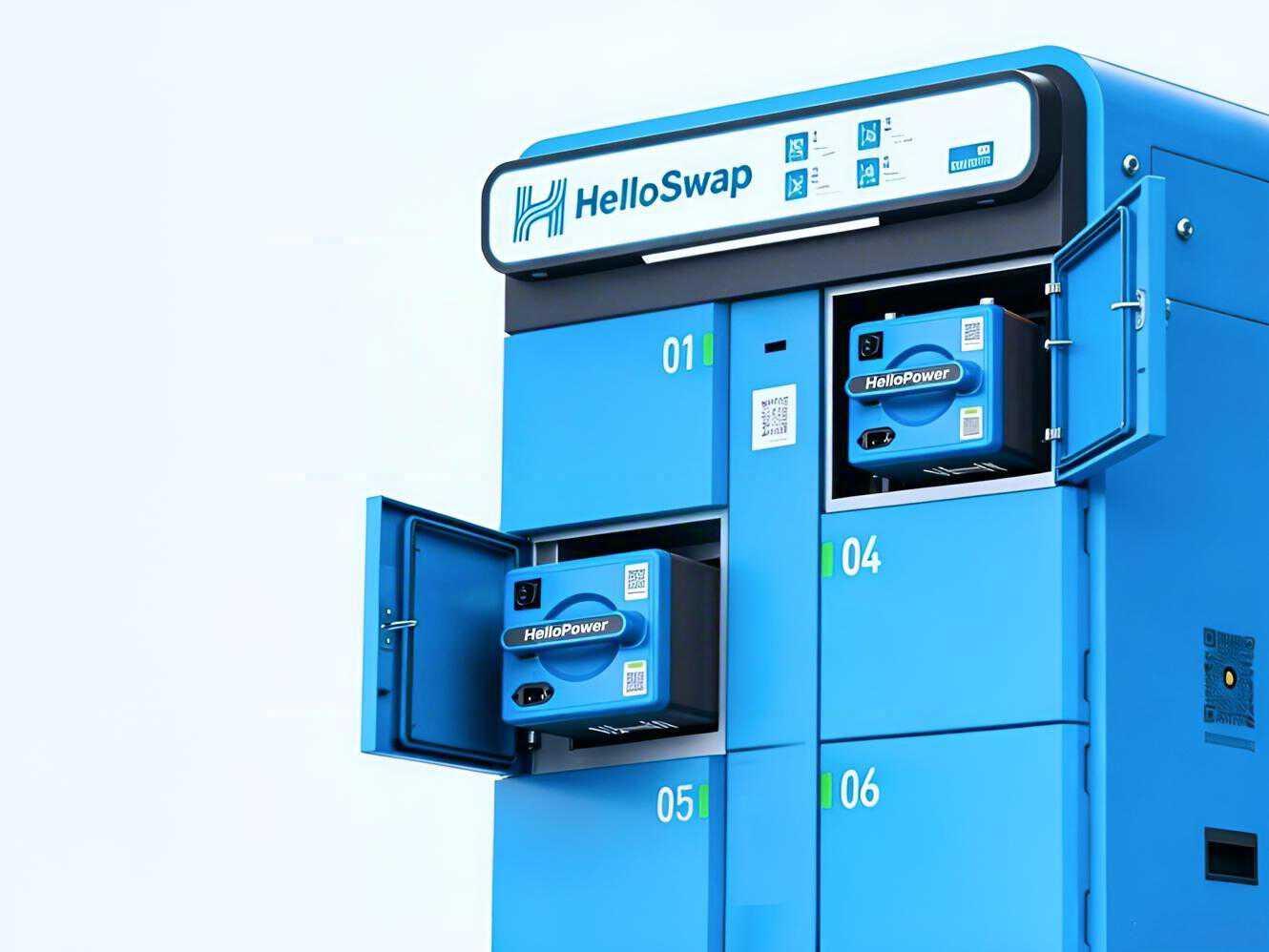
Successful swapping networks share a common profile—standardized batteries that work across vehicle types, intelligent cabinet management that keeps inventory balanced in real time, and operational flexibility that lets partners deploy under whichever structure fits their market. These aren't aspirational features—they're the baseline requirements that separate networks that scale from those that stall.
HelloPower's ecosystem reflects exactly that profile. With over 800 million global users served, 10 million+ operating vehicles, 5 million+ batteries under active management, and 80,000+ swapping cabinets deployed across 500+ cities, the infrastructure is proven at a scale most operators are still working toward. Swapping cabinets are optimized for diverse climate conditions and local vehicle form factors, and deployment models are designed to fit the realities of different markets rather than forcing a single template onto every geography.
The global market for battery swapping in electric two-wheelers is growing quickly. But projections don't build networks—operators do. If you're evaluating battery swapping infrastructure for your city, fleet, or business, get in touch with HelloPower—the contact form can be found below.
Contact Us
hellopowerglobal@hellobike.com
Location
2F, Building 1, No.898 XiuWen Road, MinHang District, Shanghai, China
Copyright © 2024 福建宁德惠智无限科技有限公司 All Rights Reserved. 闽ICP备2023025900号-3.


