
How to Identify a Safe Battery Swapping Cabinet for Electric Two-Wheelers
2026-01-29
For electric two- and three-wheeler fleets, battery swapping is no longer just about cabinets and plugs. It is a continuous service that must deliver uptime, safety, and predictable costs every single day. A battery swapping station that can complete a swap in under a minute matters, but what really separates leading networks from small pilots is the data platform behind them: how they use IoT, cloud software, and AI to keep thousands of batteries and stations working as one reliable system.
Most early deployments treated swapping as a hardware project: install a few cabinets, stock some batteries, and let riders scan and swap. This approach works at a very small scale. It breaks down as soon as you serve high-frequency users such as delivery fleets, scooter sharing, or logistics hubs.
A real battery swapping service has to manage three things in parallel:
Reliability – stations must stay online and stocked during peak hours, not only on day one.
Safety – every battery dispensed must pass basic health and risk checks automatically.
Transparency – fleet partners need clear reports on usage, costs, and asset status.
That is why large-scale networks, such as HelloPower & HelloSwap's two-wheeler operations across 400+ Chinese cities, are built around integrated platforms that connect cabinets, batteries, riders, and operators in real time instead of treating each device as a standalone asset.
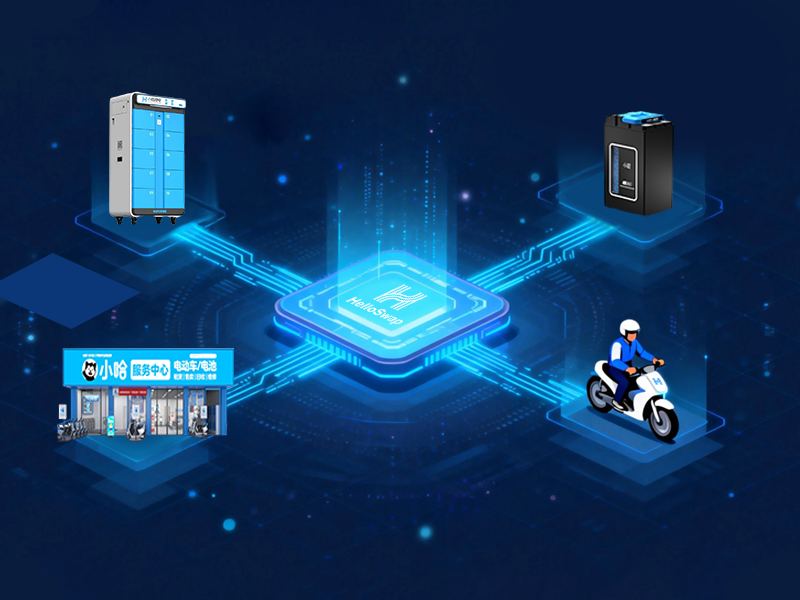
For commercial riders, downtime directly reduces earnings. Traditional plug-in charging often requires hours of parking, which is unacceptable during busy delivery windows. Smart battery swap stations compress the process to roughly the time it takes to scan a QR code, so riders can be back on the road quickly.
However, "fast swap" only matters if the network can also ensure that:
Stations stay online despite fluctuating grid conditions and outdoor environments.
A sufficient buffer of charged batteries is available at each key location.
Without a live view of station health and inventory, operators discover stock-outs and outages only when riders start to complain.
Two-wheeler fires and safety incidents are a major concern in markets where riders charge batteries at home or in informal setups. Many cities now encourage or mandate the use of certified battery swap cabinets and managed charging to reduce these risks.
For a battery swapping service, this means safety cannot be a one-time certification exercise. The system needs to:
Continuously monitor pack temperature, voltage, and State of Health before and after swaps.
Block batteries that show abnormal behavior from being dispensed to riders.
Provide auditable records that support investigations and compliance.
This kind of continuous assurance is only possible when hardware is tightly integrated with a capable data platform.
Battery swapping creates value when it improves both uptime and economics. Industry players highlight several levers:
Higher vehicle utilization – fleets can complete more trips per vehicle when they do not need to stop for long charging sessions.
Centralized care for batteries – managed charging profiles and controlled environments help extend battery life compared to unmanaged user charging.
Battery-as-a-Service (BaaS) – users buy vehicles without the battery and pay per swap or via a subscription, treating energy as a predictable operating expense rather than a large upfront purchase.
Whether these benefits materialize depends on how well the operator's platform plans capacity, monitors health, and controls costs over time—not just on the quality of the cabinet shell.
Modern battery swapping networks are IoT systems by design. "IoT" (Internet of Things) in this context means that both cabinets and batteries are equipped with sensors and communication modules that continuously send data to the cloud. Typical information includes:
Cabinet-side data – slot occupancy, door status, temperature, current, voltage, alarms, and online/offline status.
Battery-side data – unique ID, SOH, State of Charge, cycle count, temperature, and basic location or usage history.
Service data – swap timestamps, user plan type (pay-per-swap, subscription, enterprise), station and route usage patterns.
This data turns every station and battery into a live node in a connected network, rather than a black box.
On top of this IoT layer, a cloud platform provides the tools that operations teams and fleet partners actually work with. A mature platform typically offers:
Real-time operations dashboards – showing station availability, battery inventory, and swap volume across the network.
Battery health and lifecycle views – surfacing packs that show abnormal temperature or capacity trends for inspection or retirement.
Smart charging and queuing logic – prioritizing which batteries to charge next based on expected demand and charging profiles, not simply first-in-first-out.
Partner portals and APIs – enabling delivery platforms, fleet managers, or vehicle OEMs to integrate swapping into their own apps and systems.
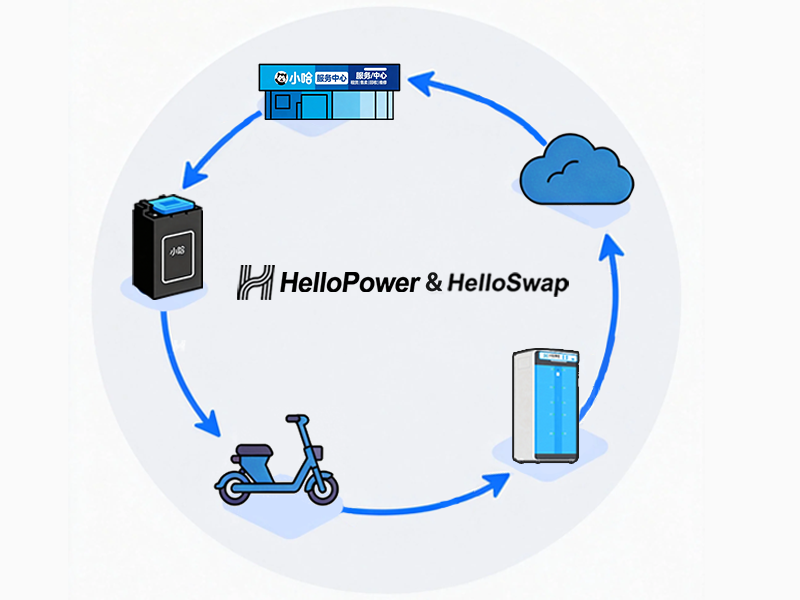
HelloPower & HelloSwap highlight this "closed-loop data ecosystem" as a core part of battery swapping solutions: data flows from battery to vehicle to station to cloud and back into operations, enabling more precise asset control and planning.
Once an operator has stable IoT connectivity and several months or years of history, AI and advanced analytics become the next step. The goal is not to replace humans, but to help teams make better decisions in large, complex networks.
In battery swapping service, well-established use cases for AI and machine learning include:
Demand forecasting – using historical patterns, weather, time-of-day, and campaign data to predict where and when swaps will spike, so operators can rebalance inventory in advance.
Battery fleet analytics – identifying degradation trends across thousands of packs to support warranty policies, second-life planning, and procurement decisions.
Network performance analysis – highlighting underused or overloaded stations and suggesting better placement or capacity adjustments.
These capabilities help operators move from reactive firefighting ("we are out of batteries at this station") to proactive planning ("we know this corridor will be busy this evening; let's prepare").
AI can also strengthen safety beyond basic thresholds and alarms. By analyzing multiple signals—temperature, voltage, charge rate, user behavior, and incident history—models can flag unusual combinations that may indicate rising risk, even when each metric still appears normal.
In practice, this can support:
Pre-swap checks in the cloud – automatically preventing high-risk batteries from being released to riders.
Prioritized alerts – ensuring operations and safety teams focus first on the most important anomalies instead of wading through raw alarm lists.
Better incident investigation – with detailed logs available for each battery and station swap.
As regulators pay more attention to shared battery systems, the ability to document and constantly improve safety practices is becoming a key differentiator.
When evaluating suppliers, it is tempting to focus on cabinet size, slot count, or headline swap speed. Yet for a battery swapping service, those are necessary but not sufficient. The more important question is: can this partner support the data and operations backbone I will rely on for years?
A practical way to assess this is to ask concrete questions such as:
What telemetry do you collect from each station and battery, and how frequently is it updated?
What tools or dashboards will my operations team get on day one?
How do you monitor and enforce battery safety before each swap?
Do you already integrate with delivery platforms, payment providers, or fleet management systems? How?
Can your system support both individual riders and enterprise fleets with different pricing models and permissions?
Suppliers that can demonstrate working solutions, backed by real-world deployments, are more likely to support a sustainable service than vendors who only talk about cabinet specifications.
Beyond technical features, there are also softer but important signals:
End-to-end integration – one provider taking responsibility for cabinet, battery, cloud platform, and app experience, rather than leaving you to stitch components together.
Proven operational experience – documented track record in large fleets or multi-city networks, not only lab tests or pilots.
Safety and compliance focus – adherence to recognized standards, multi-layer protections in cabinets and batteries, and transparent safety processes.
Localization and support – local language, payment, regulatory understanding, and on-the-ground maintenance teams instead of "ship and forget".
This is where established players like HelloPower & HelloSwap position themselves: as partners offering an integrated ecosystem and operational know-how, not just hardware.
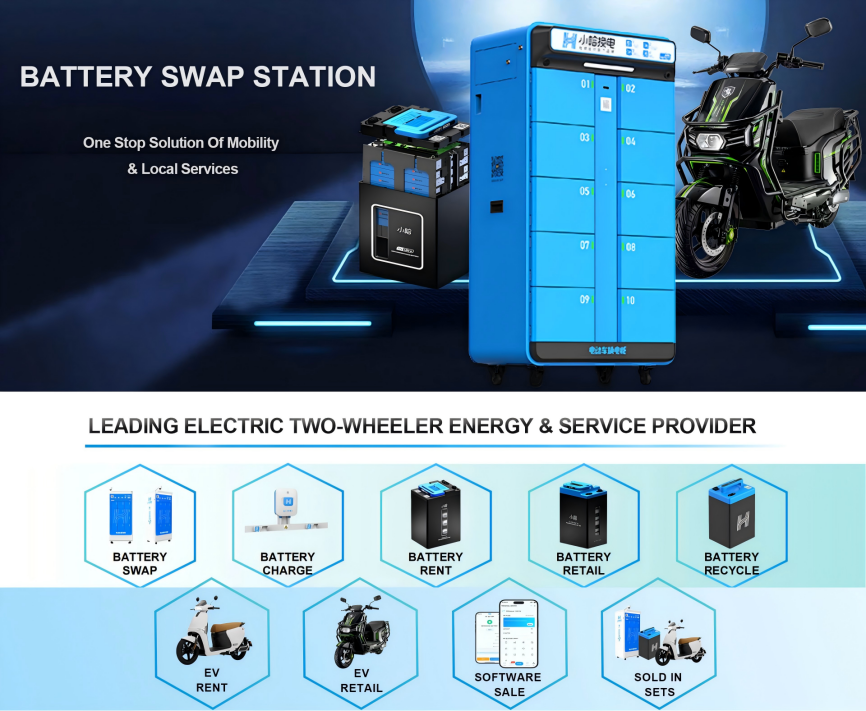
Battery swapping service for electric two- and three-wheelers is moving from experiments to critical urban infrastructure. In this phase, the winners will not be operators who simply deploy the most cabinets, but those who build the strongest data platforms behind their networks. IoT makes every cabinet and battery visible; cloud software turns this visibility into daily control; AI adds a layer of prediction and risk management on top.
HelloPower & HelloSwap combines Hello Inc.'s years of shared mobility and operations experience, Ant Group's digital and fintech capabilities, and CATL's leadership in lithium battery technology to offer an integrated, data-driven swapping ecosystem that has already scaled across hundreds of cities.
If you are planning or expanding a battery swapping service and want a partner with proven technology, operations, and safety at scale, contact HelloPower & HelloSwap to discuss a tailored solution and see how we can support your growth.
Contact Us
hellopowerglobal@hellobike.com
Location
2F, Building 1, No.898 XiuWen Road, MinHang District, Shanghai, China
Copyright © 2024 福建宁德惠智无限科技有限公司 All Rights Reserved. 闽ICP备2023025900号-3.


