
How Battery Smart Swap Stations Optimize the Operational Efficiency of Electric Two-Wheelers
2026-01-09
Global electric two-wheeler adoption accelerates faster than energy infrastructure can match. The bottleneck is not vehicle technology—modern E2Ws are efficient and reliable. The constraint is that traditional charging systems cannot scale beyond critical thresholds. Charging stations demand massive grid investments yet deliver limited throughput relative to demand. This represents a structural ceiling, not a technical limitation. Battery swapping does not optimize charging; it replaces it with an entirely different energy distribution method designed for how electric two-wheelers actually operate.
Traditional charging assumes vehicles occupy predictable downtime at fixed locations. This assumption collapses under commercial delivery, fleet operations, and urban commuting demands. The fundamental mismatch emerges across four dimensions:
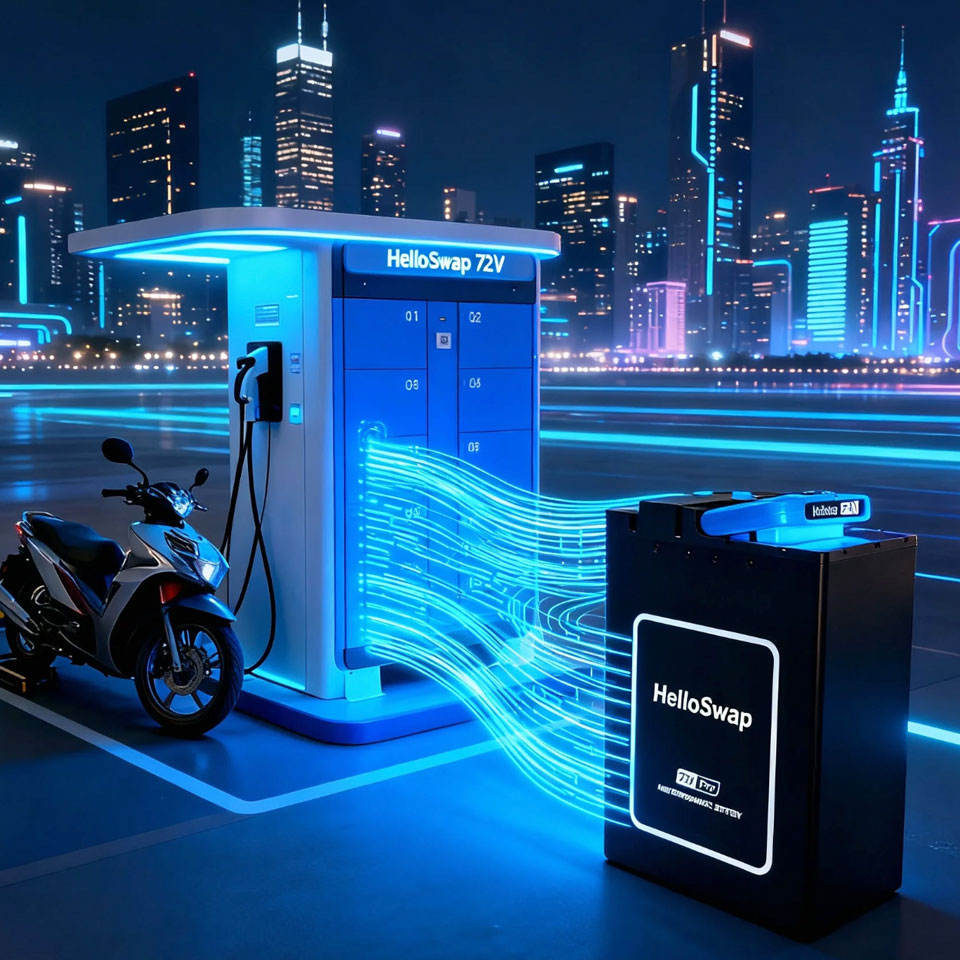
Time dimension
Charging occupies vehicles for hours while generating zero revenue. Swapping enables continuous asset circulation—delivery riders lose entire earning windows to charging, while swapping adds only 6 seconds to operations.
Space dimension
Charging depends on the wired infrastructure at specific grid connection points, requiring substantial real estate and construction investment. Swapping cabinets operate as self-contained units under two square meters, deployable wherever urban density justifies placement without grid infrastructure modifications.
Management dimension
Rider-controlled charging introduces variables—irregular timing, post-ride overcharging, inconsistent battery care, etc.—that unpredictably degrade lifespan. Centralized management in controlled environments extends cycle life 20–30%, reducing replacement costs and operational uncertainty through optimized charging curves and thermal management.
Commercial dimension
Charging revenue depends on prolonged device occupancy, but margins collapse when vehicles queue at slow chargers. Swapping scales with transaction frequency and network density, enabling predictable subscription structures aligned with fleet budgets and operational patterns.
In short, charging enables standing inventory; swapping enables inventory circulation. For high-frequency users, circulation dramatically outperforms standing capacity in uptime and economics.
The shift from "swap station" to "energy node" reflects a fundamental strategic difference. Swap stations may be passive infrastructure. Energy nodes are active network participants.
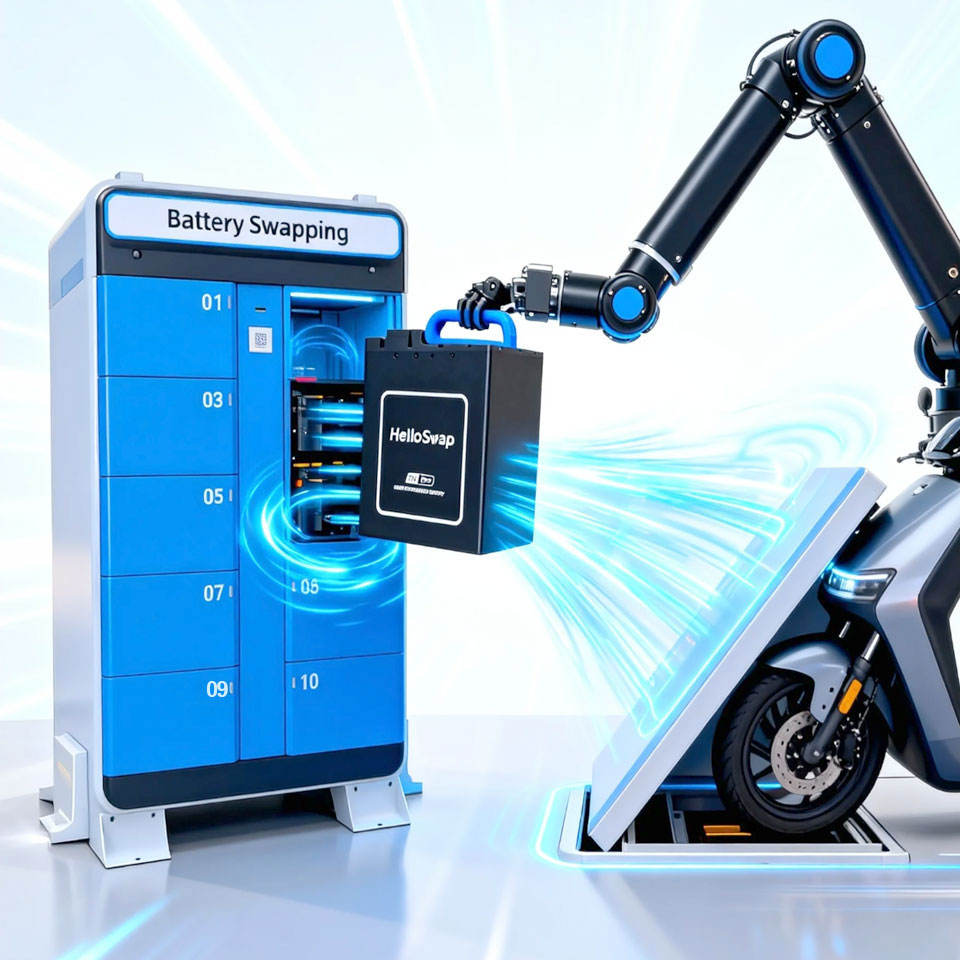
Each battery swap cabinet functions as an intelligent edge node within citywide energy grids. Unlike static charging piles, these nodes communicate continuously with cloud platforms, participating in real-time optimization algorithms as distributed components of coordinated networks.
Smart battery swap networks invert traditional ownership models. Batteries become operational assets managed at the network level with digital identities carrying real-time State of Health monitoring, cycle tracking, and degradation prediction. Algorithms queue batteries approaching useful-life limits for maintenance before failures occur.
Citywide interconnected node networks create qualitatively different capabilities. Cloud scheduling matches battery availability with rider demand 30–60 minutes ahead, triggering proactive rebalancing. Machine learning analyzes historical patterns and forecasts to predict spikes, redistributing batteries to bottleneck stations.
Battery swapping emerged globally, yet two-wheeler networks scale while passenger car swapping remains limited—not a coincidence but an engineering reality. Two-wheelers align structurally with swappable systems in ways cars cannot:
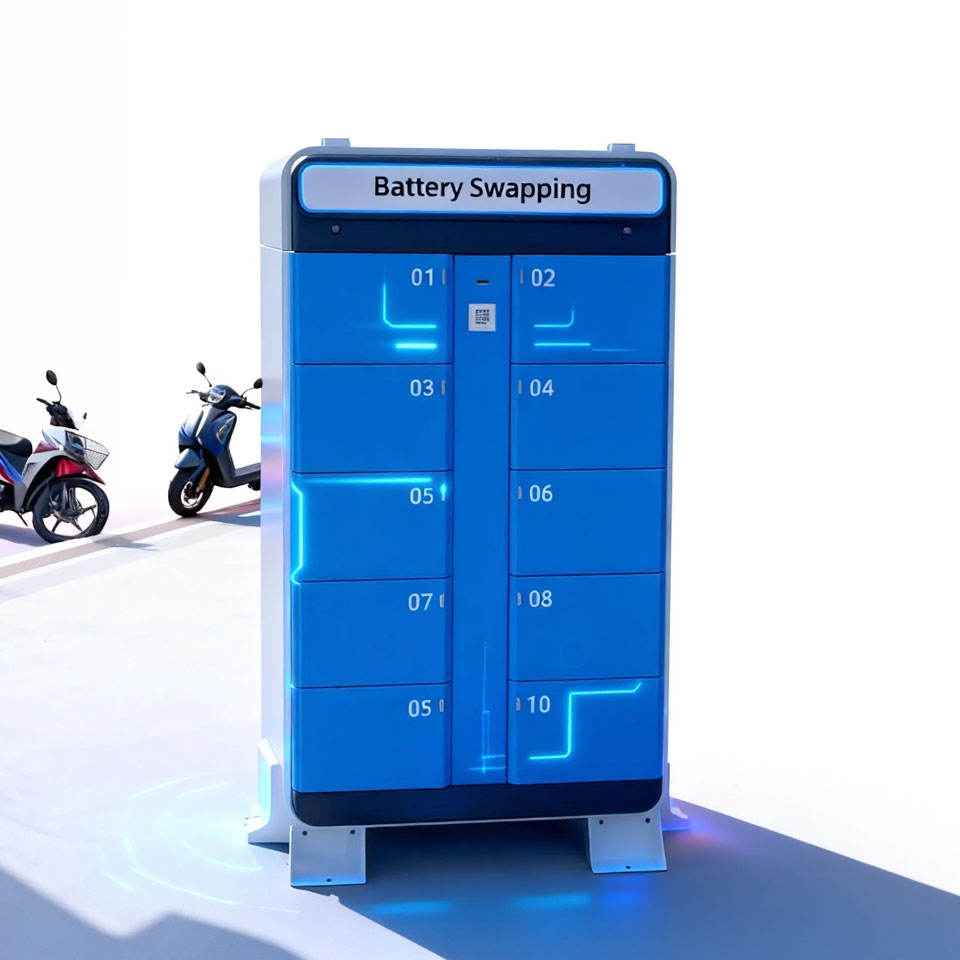
Battery standardization: Dual-interface designs handle 48V, 60V, and 72V packs across scooters, e-bikes, and motorcycles without vehicle modification—achieving unprecedented cross-manufacturer compatibility.
High-frequency usage: Daily patterns generate multiple swap events per user, concentrating demand at urban nodes where infrastructure density becomes economically viable
Time sensitivity: Delivery and commuting operations cannot tolerate multi-minute battery waits that destroy business economics, making instantaneous swaps non-negotiable
Concentrated scenarios: Food delivery and urban commuting create predictable geographic demand patterns, enabling efficient network deployment
Battery swapping for two-wheelers is not a scaled-down passenger car model. Standardized hardware, high-frequency usage, time-sensitive operations, and dense urban deployment make two-wheelers ideal for network-scale battery economics.
Hardware is necessary but insufficient. Industry competition centers not on swap cabinet specifications or battery chemistry but on who builds the most reliable, intelligent energy network operating system.
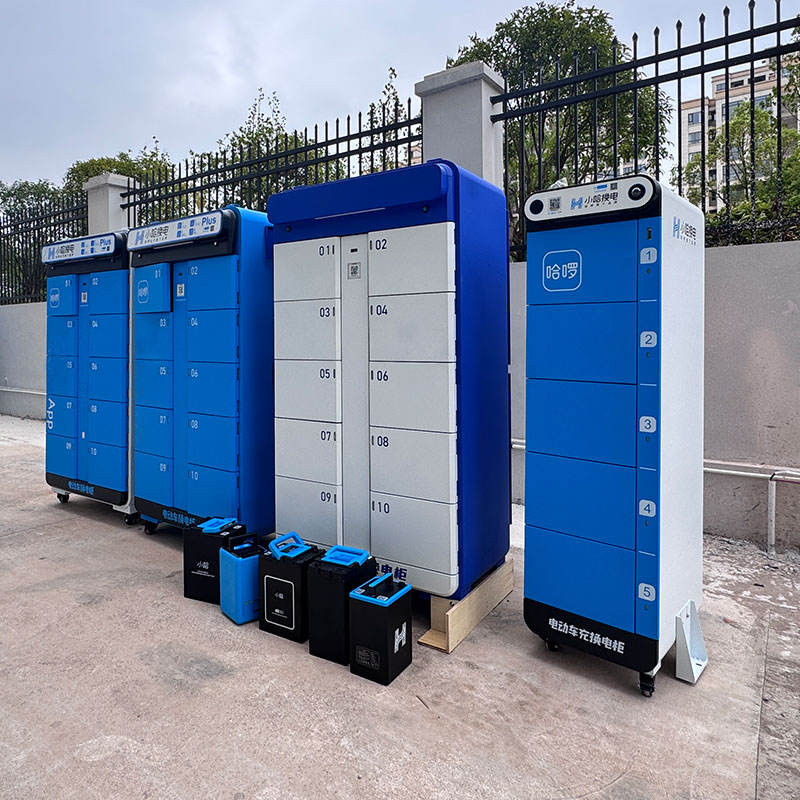
Battery swap cabinets must meet rigorous standards for safety assurance, such as CQC and NBTC certifications, IP waterproofing tested to IP54 standards, independent fire suppression per slot, and intelligent thermal management across extreme ranges. These demonstrate reliable baseline capabilities. Suppliers lacking proven credentials fail regulatory approval. Yet hardware alone cannot sustain an advantage as manufacturing scale drives commoditization.
Three layers separate leaders from followers in battery swap services:
Battery standardization capability: Establishing industry-compatible formats reduces manufacturer friction and simplifies network operations—companies controlling standards influence which OEMs join ecosystems
Intelligent dispatching algorithms: Predicting demand, optimizing flows, and matching availability requires accumulated operational data and machine learning sophistication that smaller operators cannot replicate
Operational infrastructure: 24/7 monitoring, predictive maintenance, fraud detection, and support at scale require cloud architecture and expertise that is capital-intensive and difficult to replicate
Data ecosystem integration: Closed-loop systems connecting batteries, vehicles, cabinets, and cloud platforms create network effects and switching costs
HelloPower & HelloSwap exemplifies systems-level advantage through operations across 400+ cities with over 70 thousand cabinets and more than 6 million batteries. Supported by Ant Group's cloud infrastructure, CATL's battery expertise, and Hello Inc.'s experience managing 10+ million vehicles, HelloPower & HelloSwap has built an extraordinary vertical integration. This ecosystem—combining hardware, cloud services, battery management, and 24/7 operational support—creates defensibility pure hardware suppliers cannot match.
The shift from charging to swapping fundamentally redefines how each participant in the energy value chain operates and captures value.
Participant | Traditional Charging Model | Battery Swapping Model | Core Change |
Cities & Municipalities | Approve charging station sites; manage grid demand; respond to congestion complaints | Coordinate city-level energy distribution; optimize battery flows across network zones; govern swap station density for coverage | From passive approvals → active network governance |
Fleet Operators & Logistics Companies | Purchase vehicles with batteries; manage individual charging schedules; absorb battery degradation risk; bear replacement costs | Transition to Battery-as-a-Service; pay subscription for battery access; eliminate ownership risk; reduce vehicle fleet size by 20-30% through network circulation | From vehicle owners → energy subscribers |
Vehicle Manufacturers & OEMs | Sell complete assembled vehicles with integrated batteries; bear 8-10 year battery warranty risk; manage customer battery failures | Sell vehicle platforms without batteries; focus entirely on chassis/motor/drivetrain performance; license battery standards; partner with swap operators for ecosystem revenue | From integrated hardware sales → modular ecosystem participants |
Delivery Riders & End Users | Purchase and maintain batteries individually; manage charging timing and frequency; face range anxiety; absorb replacement costs when degradation occurs | Access batteries as a service with no ownership; pay-per-swap or monthly subscription aligned with usage; zero replacement risk; unlimited daily range through network | From battery consumers → energy subscribers |
Battery smart swap stations are not improving charging. They are redefining how energy is distributed, owned, and managed for electric two-wheelers. This transition from individual ownership to network-managed services parallels earlier infrastructure shifts—from private generation to grid electricity, from private transportation to shared mobility. Cities gain energy governance tools aligned with decarbonization. Fleet operators unlock cost reductions and efficiency. Vehicle manufacturers participate in sustainable logistics without battery risk.
HelloPower & HelloSwap delivers complete operating systems—from intelligent deployment to cloud optimization to 24/7 support—enabling profitable, scalable energy networks. Ready to transition from infrastructure to systems? Feel free to contact us for a personalized consultation on deployment strategies and economics modeling.
Most modern E2Ws use dual-interface battery designs compatible with standardized swap networks without modification. Fleet integration requires only app onboarding and operational workflow adjustment—no vehicle retrofitting or capital reinvestment in hardware.
BaaS decouples vehicle purchase from battery ownership—riders buy vehicles at a lower upfront cost and subscribe to battery access. This converts unpredictable capital expenses into predictable operating expenses aligned with actual usage, eliminating replacement risk and reducing entry barriers.
Unlike charging stations that operate independently, swap networks coordinate inventory across locations. Cloud algorithms analyze patterns and demand signals to route batteries proactively, enabling dynamic matching of cabinets, batteries, and vehicles at the network level rather than the individual user level.
Leading systems employ intelligent thermal management systems that monitor temperature in real-time, with automatic temperature-based charging cutoff, independent fire suppression per battery slot, waterproof and dustproof design (IP54 tested), and intelligent BMS detecting anomalies early. Centralized management eliminates uncontrolled rider charging that creates most safety incidents.
Beyond cabinet and battery products, HelloPower & HelloSwap provides 24/7 customer support teams, intelligent scheduling systems, standardized deployment planning, customized enterprise packages for fleet operators, OTA (over-the-air) software updates, and operational expertise across 400+ cities. This end-to-end support distinguishes HelloPower & HelloSwap from hardware-only suppliers.
Contact Us
hellopowerglobal@hellobike.com
Location
2F, Building 1, No.898 XiuWen Road, MinHang District, Shanghai, China
Copyright © 2024 福建宁德惠智无限科技有限公司 All Rights Reserved. 闽ICP备2023025900号-3.


