
What Is a Battery Swapping Cabinet and Why It Matters for E-Scooters & E-Bikes in 2026
2025-12-12
Urban food delivery, express logistics, and e-commerce operations depend on maximizing vehicle uptime. With fuel-powered motorcycles, delivery platforms simply plug in and refuel. But electric two-wheelers (E2Ws) face a critical energy bottleneck: traditional charging requires 4–6 hours of downtime that delivery riders cannot afford. Smart battery swap stations solve this impossibility by eliminating charging wait times entirely. Instead of charging batteries, riders exchange depleted packs for fully charged ones in seconds, enabling truly non-stop operations that keep earnings flowing throughout the day.
Battery swapping appears deceptively simple to riders—scan QR code, swap battery, ride—but four integrated technical systems work in perfect synchronization to ensure every exchange is safe, fast, and reliable.
Before any swap occurs, the system verifies each battery's unique digital identity and checks its safety record. This prevents counterfeit or degraded batteries from ever reaching riders, ensuring only quality-assured units enter circulation.
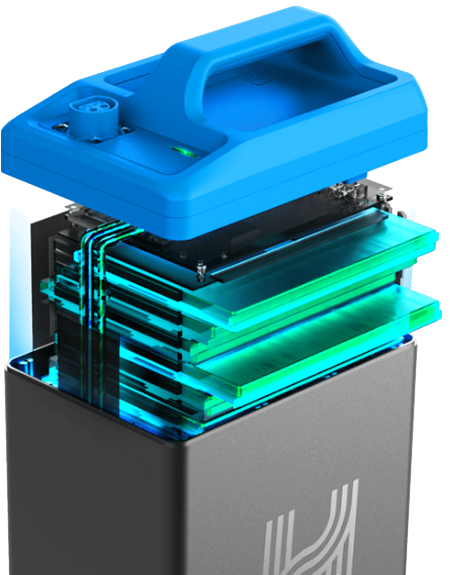
Digital Identity Assignment: Each battery receives a unique serial ID tracked across its entire lifecycle from manufacturing through retirement
Tamper Detection Systems: Anti-counterfeiting protocols prevent non-standard or degraded batteries from entering the swap network
Blockchain Traceability: Advanced systems maintain immutable ledgers of each battery's charge cycles, thermal history, and performance data
Ownership Binding: Cloud infrastructure links physical batteries to user accounts, enabling remote security if theft is detected
Once identity verification completes in milliseconds, the cabinet executes a precisely engineered mechanical sequence. Riders receive a fully charged battery within 6–15 seconds through seamless automated operations.
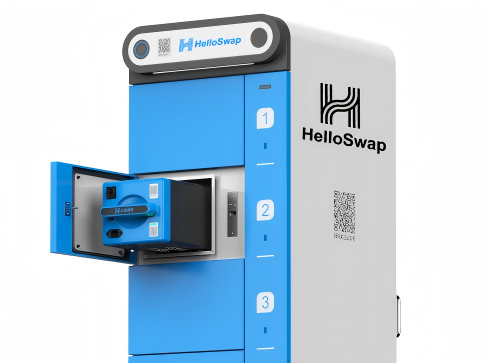
Door Authentication and Unlock: Electromagnetic locks open cabinet doors only for authenticated users with redundant sensors preventing simultaneous access
Slot Detection: Infrared sensors identify fully charged batteries versus empty bays, ensuring riders receive operational units instantly
Battery Insertion Recognition: Contact sensors immediately detect when a depleted battery enters a designated cabinet bay
Automated Locking Protocol: Spring-loaded mechanisms automatically secure the depleted battery once properly seated, triggering the cabinet's charging protocol
Upon insertion, the cabinet transmits data to the cloud PaaS system. Algorithms instantly verify safety metrics, ensuring only healthy batteries remain in circulation while isolating unsafe units from future users.

Voltage and Temperature Assessment: Real-time sensors measure instantaneous voltage across all cells to detect short circuits, capacity loss, or internal damage
State of Health Calculation: Cloud algorithms analyze charge acceptance patterns and internal resistance to determine remaining cycle lifespan
Thermal Profiling: Batteries exceeding safety thresholds (typically 60°C) are automatically isolated and flagged for maintenance review
Cycle Count Verification: System logs every charge cycle and automatically retires batteries after around 2,000 cycles to prevent failure
Beyond individual cabinets, the SaaS platform coordinates the entire network. It balances inventory across stations and predicts demand peaks, ensuring riders always encounter available batteries regardless of location or time.

Real-Time Demand Forecasting: Machine learning analyzes historical swap patterns, weather, and delivery pricing to predict station demand thirty to sixty minutes ahead
Dynamic Inventory Rebalancing: Operations managers receive alerts when stations face battery shortages and coordinate proactive transfers via delivery vehicles
Predictive Charging Allocation: System prioritizes charging based on predicted pickup times rather than maximum speed, extending battery life by 20–30%
Cross-Station Battery Transfers: When one station has excess inventory while neighbors face shortages, the system coordinates transfers within hours to eliminate imbalances
Metric | Traditional Charging | Smart Battery Swap Station |
Duration | 4–6 hours | 6–15 seconds |
Battery Management | User-controlled | Centralized optimization |
Lifespan | 1,500–1,800 cycles | 2,000+ cycles (+10–25%) |
Safety | Overcharge/thermal risks | Centralized thermal management |
Downtime Impact | 15–20% daily non-availability | Near-zero peak-hour downtime |
For commercial delivery operations, battery swapping eliminates the productivity ceiling imposed by traditional charging. Riders with access to dense swap networks operate 20+ percent more efficiently, directly improving fleet profitability through higher delivery volumes and lower per-unit operating costs.
Battery swap stations deliver transformative efficiency gains across sectors dependent on high-frequency, short-distance travel with electric two-wheelers:
Food Delivery Platforms: Riders covering 100+ kilometers daily eliminate fuel purchases and charging waits; flat-rate subscriptions replace volatile fuel costs with predictable monthly expenses
Express and E-Commerce Delivery: Courier networks maintain continuous fleet availability through centralized battery management, enabling guaranteed delivery windows without vehicle backup inventory
Shared Dockless E-Bike Networks: Urban mobility operators reduce manual battery replacement labor by 60–70% while maintaining 24/7 vehicle availability for point-to-point commuting
Corporate and University Commute Programs: Organizations deploy on-site swap stations for employee fleet vehicles, ensuring 100% rider readiness while supporting decarbonization goals
Urban Micro-Mobility Systems: Municipal e-bike-sharing networks integrate swap stations into transit hubs, enabling seamless first-last mile connectivity with zero downtime between users
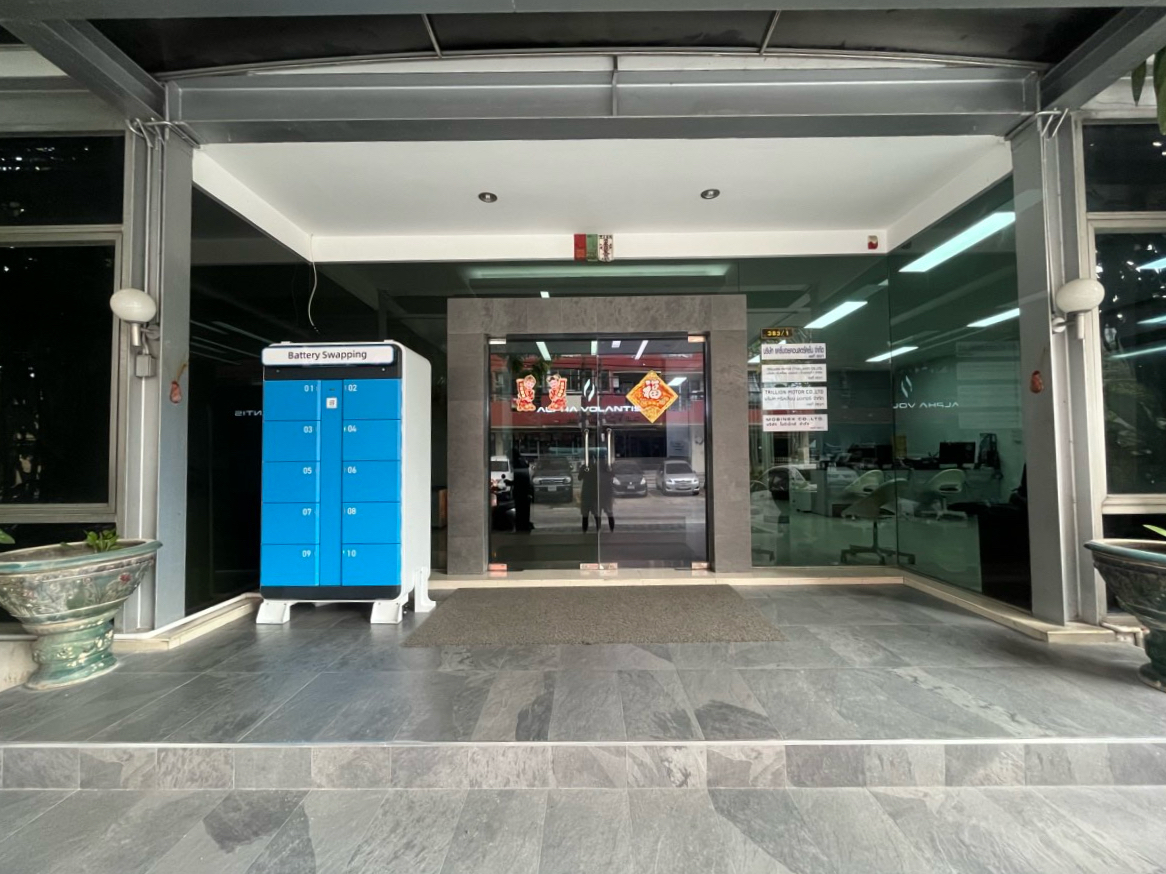
Deploying a commercial swap network requires solving multiple infrastructure challenges simultaneously to ensure reliable, scalable operations:
Strategic Location Mapping: Advanced algorithms analyze human traffic density, rider movement patterns, and commercial district boundaries to identify optimal station placement, ensuring maximum daily transaction volume and minimal user travel distance
Modular Hardware Scalability: Individual cabinets support 5–12 slots, and multiple units can be deployed at a single location, enabling networks to scale from 5–10 slots in emerging markets to 60+ slots in high-density urban corridors, matching infrastructure growth with actual demand rather than over-investing upfront
Extreme-Temperature Reliability: Intelligent thermal management systems maintain stable charging and battery health in low-temperature and high-temperature environments where conventional equipment fails, extending operational seasons and geographic deployment options across diverse climates
Remote Infrastructure Management: Cloud-based monitoring and automated dispatch systems enable a single operations team to oversee hundreds of distributed stations, eliminating the need for on-site technicians and reducing operational overhead by over 40%
HelloPower & HelloSwap Solution: As China's leading two-wheeler energy provider—jointly founded by Hello Inc., Ant Group, and CATL—HelloPower & HelloSwap custom-designs smart battery swap stations addressing all these infrastructure considerations, enabling rapid network deployment with optimized site economics and seamless operational integration.
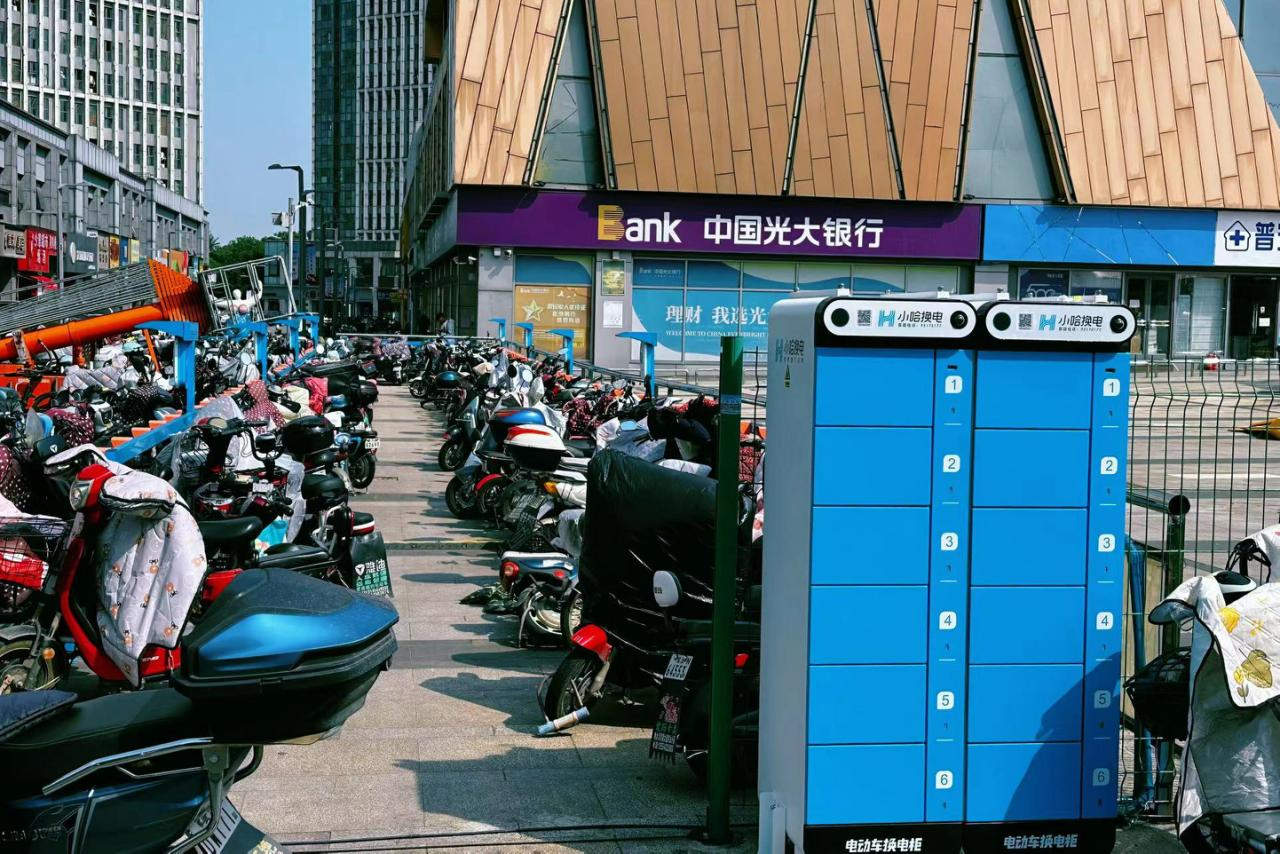
As swap networks mature, emerging operational practices are reshaping how operators extract maximum value from infrastructure investment:
Dynamic Pricing and Peak-Hour Incentives: Intelligent systems adjust swap pricing based on real-time inventory levels, incentivizing riders to swap during low-demand periods while ensuring battery availability during peak earning hours
Predictive Maintenance and Rapid Asset Rotation: AI-driven health diagnostics flag degrading batteries before user-facing failures occur, enabling proactive replacement cycles that maintain network reliability while optimizing battery lifecycle value
Multi-Modal Energy Integration: Leading operators integrate renewable energy sources and smart-grid connectivity, reducing electricity costs by 30–50% while creating grid-stabilization revenue streams
Data-Driven Density Optimization: Advanced analytics identify underperforming station locations and recommend consolidation or relocation, maximizing return on infrastructure investment within 12–18 months of network maturity
Smart battery swap stations fundamentally reshape how electric two-wheelers maintain operational continuity. This technology transforms battery management from individual rider responsibility into a networked infrastructure automatically optimizing for safety, efficiency, and profitability.
If you operate delivery fleets, manage shared vehicle networks, or plan urban energy infrastructure investments, HelloPower & HelloSwap provides proven end-to-end solutions backed by 400+ cities, 70,000+ deployed stations, and 6+ million active batteries to eliminate deployment complexity and accelerate profitability.
Contact our technical team today for detailed network assessments, customized hardware configurations, and comprehensive financial projections.
A smart battery swap typically takes 6–15 seconds. Riders scan a QR code, insert the depleted battery, and remove a fully charged one. Systems like HelloPower & HelloSwap enable zero-training, instant exchanges.
Two modes are available: pay-per-swap and subscription plans. Enterprises or high-frequency fleets can use monthly/quarterly subscriptions for unlimited swaps, ensuring predictable operating costs.
Yes. Safety is ensured through cloud diagnostics, thermal management, and smart BMS systems. Abnormal batteries are automatically isolated before use.
Most two-wheel electric vehicles, including delivery scooters, shared e-bikes, and commuter bikes, are compatible. Dual-interface batteries work without modifying vehicles.
Yes. Smart battery swap stations are engineered to operate reliably between -20°C and 55°C, using intelligent temperature control to maintain battery performance in both cold and hot environments.
Contact Us
hellopowerglobal@hellobike.com
Location
2F, Building 1, No.898 XiuWen Road, MinHang District, Shanghai, China
Copyright © 2024 福建宁德惠智无限科技有限公司 All Rights Reserved. 闽ICP备2023025900号-3.


