
Battery Swapping Service Standards: What OEMs and Cities Should Look For
2026-02-24
Southeast Asia is emerging as one of the most important regions for battery swapping, driven by dense cities, motorcycle-first traffic patterns, and the rapid expansion of delivery and ride-hailing services. Governments are pushing for cleaner transport, while fleets and riders look for ways to cut fuel and maintenance costs without sacrificing uptime.
This guide highlights 6 leading battery swapping companies that either operate commercial networks in Southeast Asia or run significant, verified pilots that shape the region's ecosystem.
Gogoro, a Taiwan-based light-EV battery swapping pioneer, has been expanding its influence into Southeast Asia through pilots and partnerships. Its GoStation network and Powered by Gogoro Network (PBGN) model provide a blueprint for high-density urban swapping ecosystems.
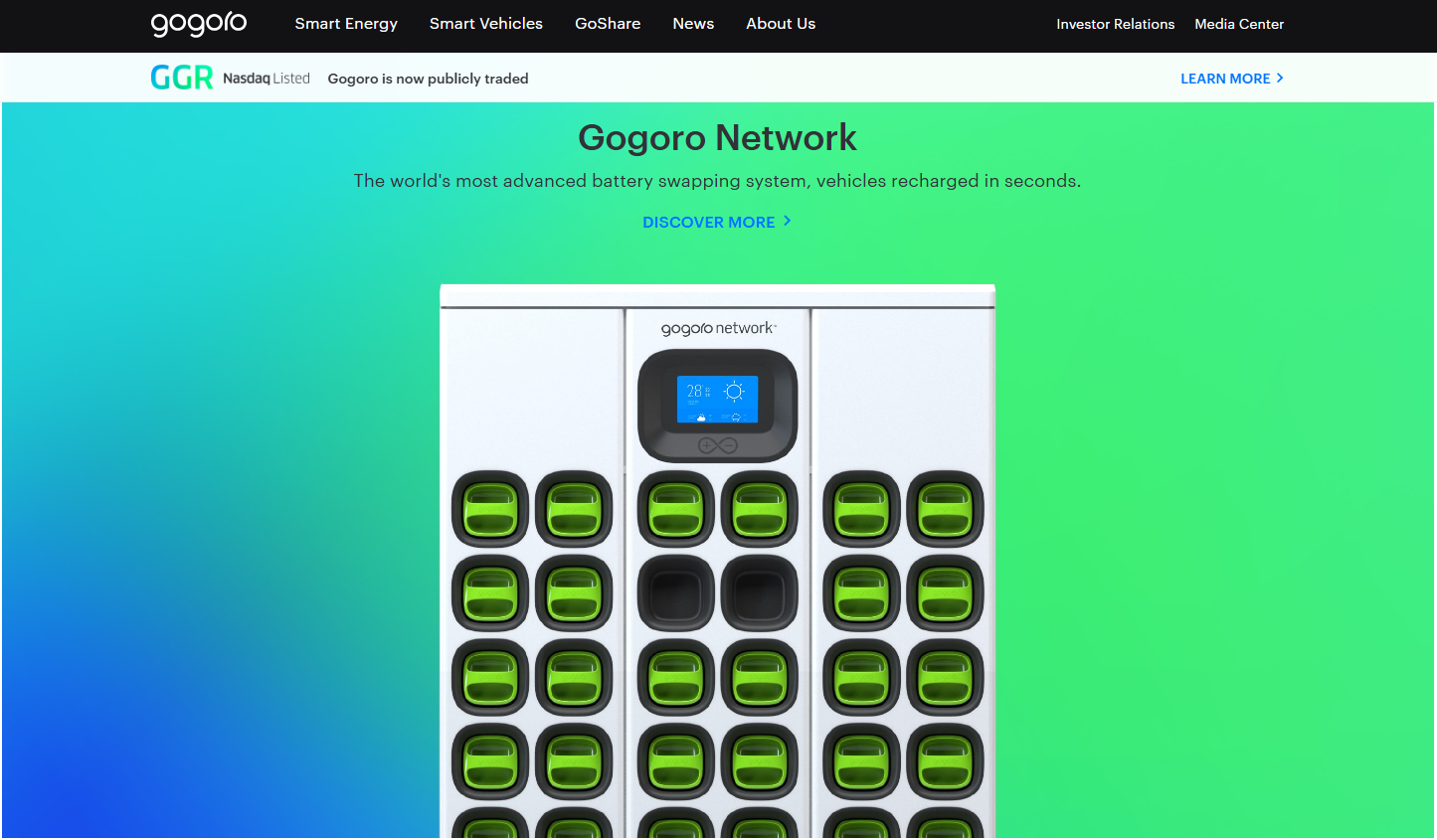

(Source: Gogoro)
Key regional initiatives:
Indonesia: Gogoro has partnered with Gojek and Electrum in Jakarta to deploy Smartscooters and GoStations for last-mile delivery and ride-hailing pilots.
Singapore: In partnership with Cycle & Carriage and foodpanda, Gogoro is running a delivery-fleet pilot using Swapping-as-a-Service for foodpanda riders.
Philippines: Gogoro announced a two-wheel battery-swapping pilot in Manila with local partner Ayala Corporation.
Why it matters for Southeast Asia:
Gogoro's pilots prove that high-frequency delivery and ride-hailing use cases can run on swapping instead of fuel, without hurting rider earnings.
Its open PBGN model gives local OEMs and fleet operators a ready-made swapping platform they can plug into rather than building everything from scratch.
These pilots do not yet match Gogoro's home-market (Taiwan) scale, but they are among the most advanced examples of structured, fleet-focused battery swapping projects in Southeast Asia.
Blueshark combines smart electric scooters with a growing battery swapping network in Malaysia, targeting both commuters and commercial riders. Through a joint venture with Petronas Dagangan, it is moving from early pilots to a more structured rollout.
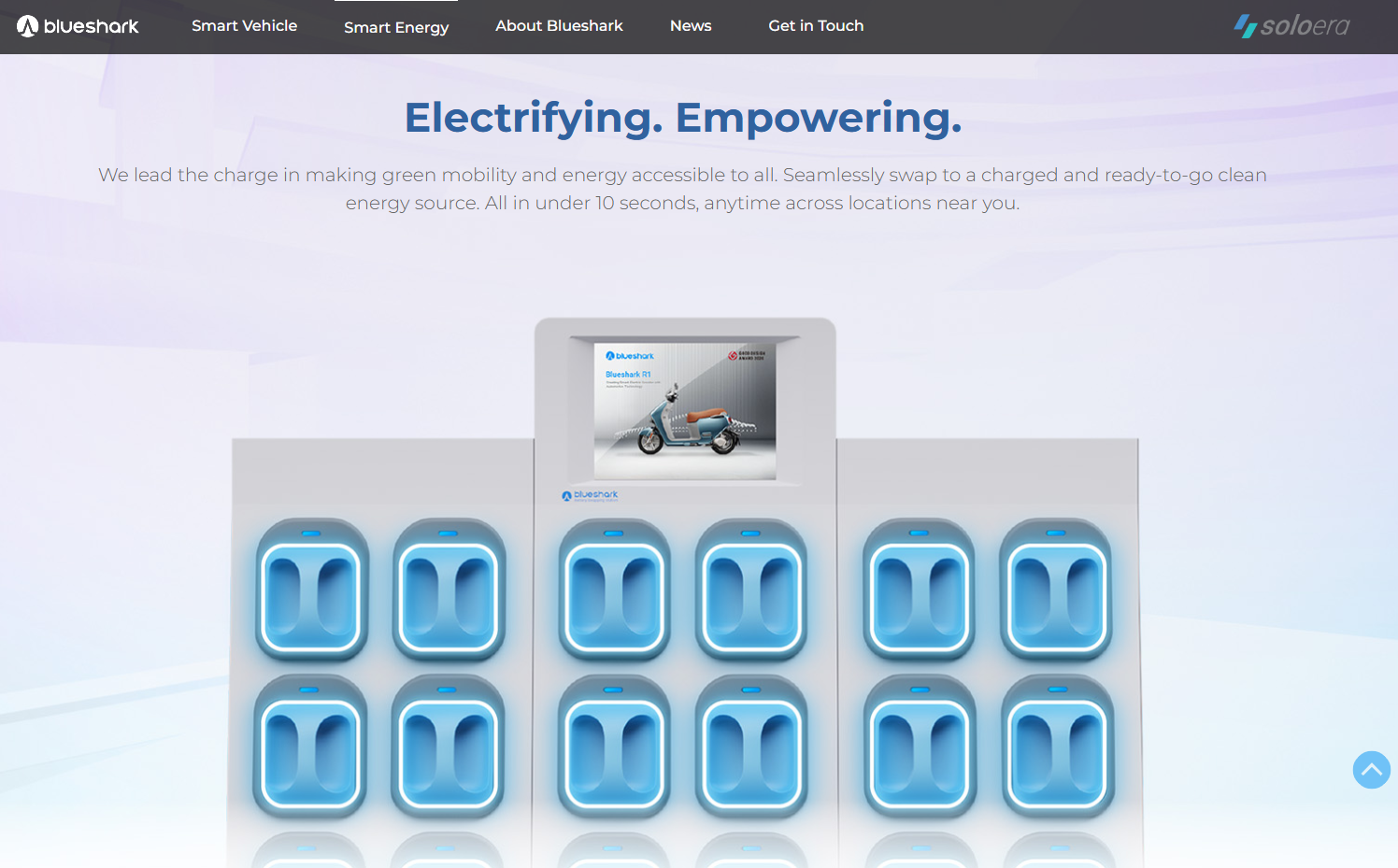

(Source: Blueshark Malaysia)
Focus country: Malaysia
Core business: Smart e-scooters plus battery swapping network
Key facts and strengths:
By 2024–2025, Blueshark had opened swap outlets in the Klang Valley and other urban areas, with around 15 locations already operating, including sites at Petronas stations.
The Petronas JV aims to grow that footprint to more than 50 swap locations nationwide by around mid-2026, as part of a phased rollout.
IoT-connected scooters, batteries and stations help the company track battery health, uptime and rider behavior in real time.
Because Blueshark controls both the scooters and the energy network, it can roll out tightly integrated solutions for Malaysian riders and fleets, rather than leaving them to mix and match hardware and infrastructure on their own.
Oyika is a Singapore-headquartered battery-as-a-service (BaaS) provider focused on electric motorbikes and active across several Southeast Asian markets. It bundles e-motorbikes, swappable batteries and access to swap cabinets into flexible subscription packages that suit gig-economy and delivery riders.
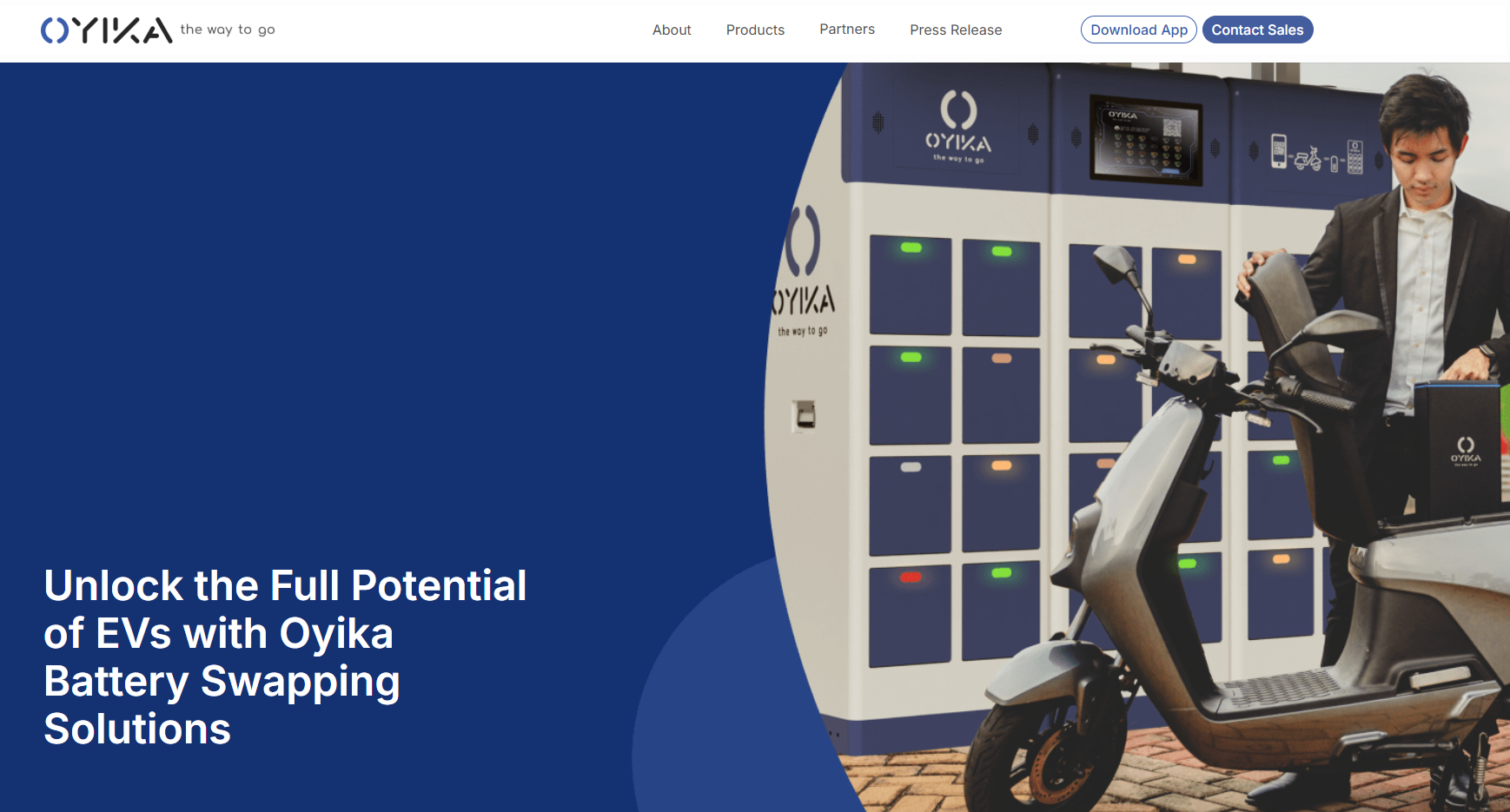

(Source: oyika.com)
Focus countries: Singapore (HQ) with deployments and pilots in Indonesia, Cambodia, Thailand and Malaysia
Core business: BaaS for electric motorbikes
Key facts and strengths:
Riders can subscribe to plans that cover the bike, the battery, and a set number or unlimited swaps, which keeps upfront costs low.
Oyika's swappable batteries are designed to work with multiple popular motorcycle models used in Southeast Asia.
The company is backed by investors such as Banpu NEXT and has worked with organizations including UNDP, which adds weight to its regional growth plans.
For many riders in emerging markets, owning the battery is too expensive and risky; Oyika's subscription model turns energy into a predictable monthly cost instead.
Selex Motors is a Vietnamese startup that has built a full ecosystem around electric motorbikes, smart swappable batteries, and a dense network of battery "ATM"-style swap stations. It focuses heavily on delivery and logistics fleets in big cities such as Hanoi and Ho Chi Minh City.
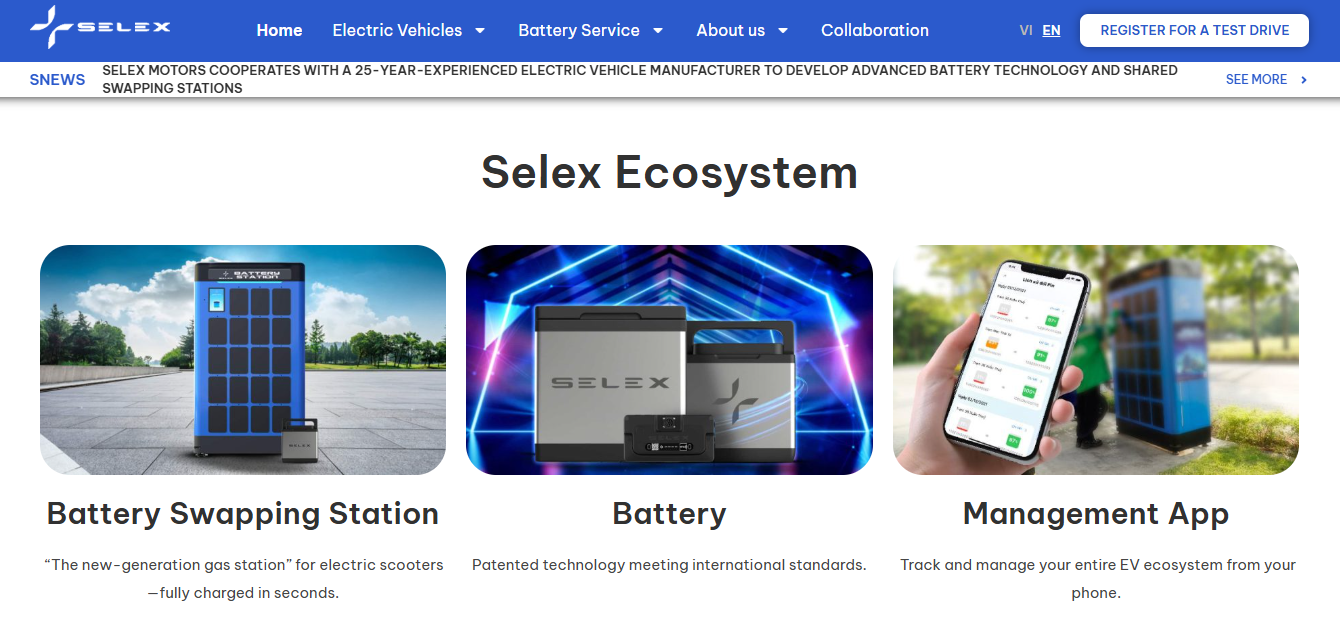

(Source: Selex Motors)
Focus country: Vietnam
Core business: Electric motorbikes, swappable batteries and swap stations
Key facts and strengths:
Selex already runs several dozen swap stations in major cities, and estimates put the total somewhere between those confirmed sites and around 100 locations as the network expands.
Partners include big delivery and logistics platforms like Grab, Lazada Logistics, BAEMIN and Viettel Post, which use Selex vehicles and stations for last-mile delivery.
Its batteries and stations are connected via IoT, giving Selex live data on inventory, usage and performance to fine-tune operations.
Because Selex owns the vehicle, the battery and the software layer, it can treat battery swapping as a way to improve fleet productivity and economics, not just as a way to solve range anxiety.
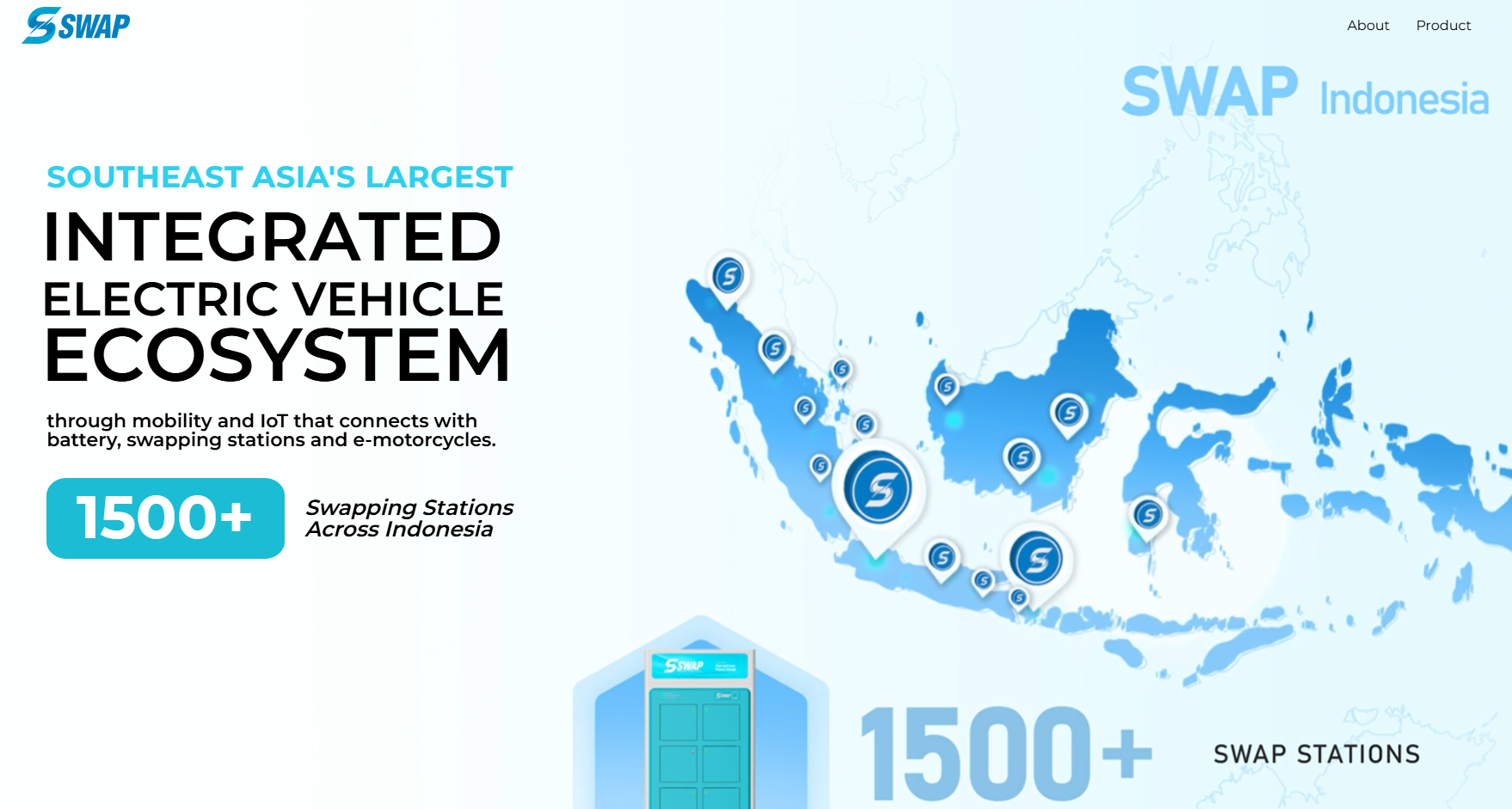
Swap Energi Indonesia (SWAP) is one of Indonesia's most visible battery swapping operators for electric motorcycles and works closely with Smoot and other partners to build a swap-first ecosystem. Smoot scooters are designed from day one to use SWAP's battery swapping network.

(Source: swap.id)
Focus country: Indonesia
Core business: Swappable battery technology and swap network for e-motorcycles
Key facts and strengths:
Riders of Smoot and other compatible e-motorcycles can change batteries in seconds at SWAP stations, instead of waiting hours to charge.
SWAP has raised multi-million-dollar funding rounds to support aggressive rollout, and its network has already grown to hundreds of swap points in key Indonesian cities, with more sites on the way and the total expected to move into the four-figure range.
The ecosystem bundles electric motorcycles, batteries and swapping access into leasing and fleet packages, which makes it easier for logistics and delivery operators to go electric.
Given Indonesia's huge motorcycle population, SWAP and Smoot show how tightly integrated vehicle and energy solutions can push swapping from small pilots into daily commercial use.
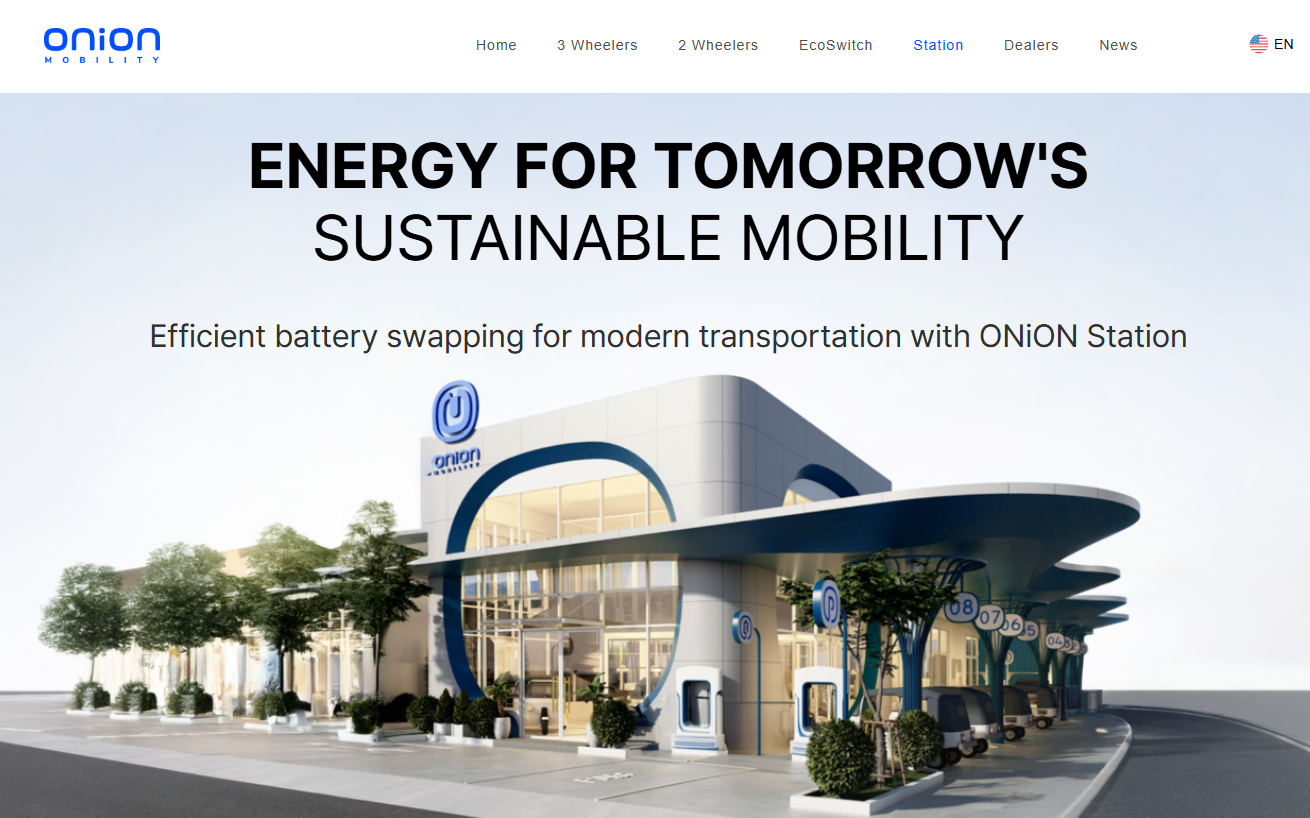
ONiON Mobility, based in Cambodia, builds electric tuk-tuks and three-wheelers and supports them with a dedicated battery swapping network. Its mission is to swap out noisy, polluting tuk-tuks for cleaner alternatives without hurting driver income.

(Source: ONiON Mobility)
Focus country: Cambodia
Core business: Electric tuk-tuks plus battery swapping stations
Key facts and strengths:
Models like the ONiON T1 series use swappable battery packs that drivers can change at ONiON stations in just a few minutes.
ONiON has built a small but growing network of swap stations in Phnom Penh and nearby areas, even though it doesn't share an exact station count publicly.
A dedicated mobile app helps drivers find the nearest station, check if batteries are available and manage their accounts.
By focusing on tuk-tuks rather than only motorcycles, ONiON opens up battery swapping to a vehicle segment that is central to everyday mobility and tourism in Cambodian cities.
Across these six examples, several patterns stand out:
Two-wheelers and light fleets lead the way.
Motorcycles, scooters, tuk-tuks and small taxis are the primary focus, reflecting how most Southeast Asians move and how last-mile delivery is organized.
Fleet economics drive deployment.
Many deployments are anchored in partnerships with food delivery, e-commerce logistics and ride-hailing platforms, which provide the daily usage needed to make swap infrastructure financially viable.
Battery-as-a-Service models are becoming standard.
Instead of selling batteries, operators increasingly use subscription, leasing or pay-per-swap models that turn energy into an operating expense and greatly reduce upfront costs for riders and fleets.
Integrated vehicle-and-energy platforms are winning.
Companies that control or tightly coordinate the scooter, battery, software, and swap station layers can optimize uptime, battery health, and station placement more effectively than fragmented models.
The result is a rapidly maturing ecosystem where battery swapping is becoming a practical, commercially viable tool for decarbonizing everyday mobility in Southeast Asia, especially in high-utilization, time-sensitive use cases.
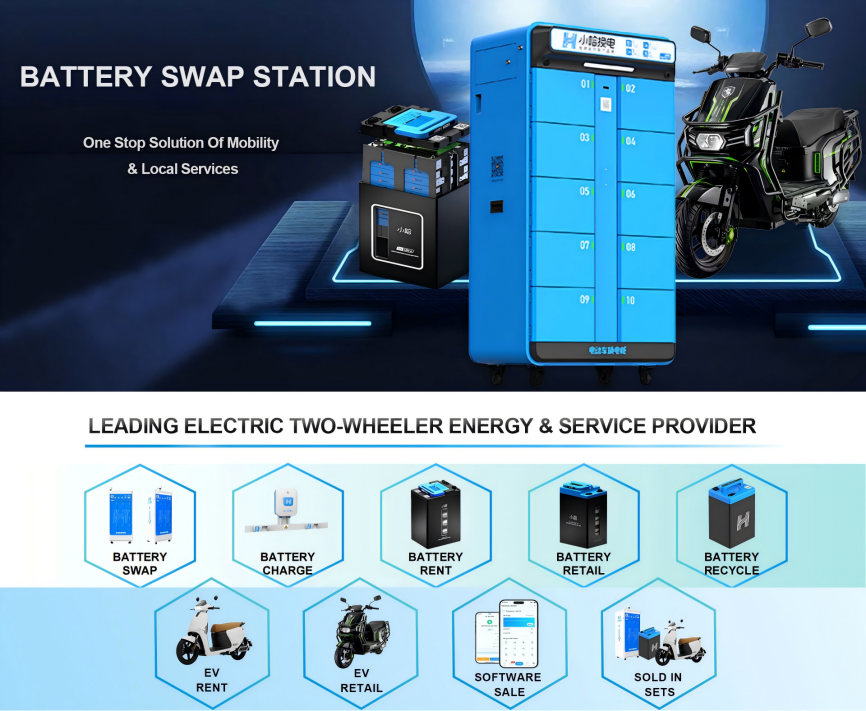
Alongside local operators, many stakeholders in Southeast Asia are partnering with global providers that already run large-scale two-wheeler battery swapping networks. HelloPower (HelloSwap) is one such China-based provider, co-founded by Hello Inc., Ant Group and CATL to combine mobility operations, digital technology and advanced battery R&D in one ecosystem. Its smart swap cabinets, high-safety lithium-ion battery packs and AI-driven management system are already in use across several markets, including a flagship deployment in Thailand.
Explore HelloPower (HelloSwap)'s Complete Solutions Overview
For Southeast Asian cities and operators that prefer not to build everything from scratch, HelloPower can provide:
Ready-made modular intelligent swap cabinets with multi-layer safety and remote diagnostics
High-cycle-life LFP/NCM battery packs optimized for delivery and ride-hailing usage
A cloud-IoT-AI data platform for station siting, pricing, and battery-health optimization
Proven operational experience plus localized deployment support in your specific market
By combining local partners on the ground in Southeast Asia with HelloPower's mature technology and operating know-how, cities and fleets can roll out battery swapping faster, lower technical risk and hit sustainability targets sooner. If you are exploring a battery swapping project in Southeast Asia and want to shorten your learning curve, you can contact the HelloPower team to discuss tailored cooperation models and deployment plans.
Contact Us
hellopowerglobal@hellobike.com
Location
2F, Building 1, No.898 XiuWen Road, MinHang District, Shanghai, China
Copyright © 2024 福建宁德惠智无限科技有限公司 All Rights Reserved. 闽ICP备2023025900号-3.


