
How a Smart Battery Swap Station Works for Electric Two-Wheelers
2025-12-22
As electric two-wheelers and three-wheelers become the backbone of urban logistics and daily commuting, the demand for efficient, reliable energy solutions has reached a critical tipping point. Riders and fleet managers constantly face the "range anxiety" dilemma: how to keep vehicles moving without sacrificing productive hours to plug-in downtime. This article explores the comparative strengths of the emerging battery swapping cabinets versus traditional charging stations, analyzing which infrastructure model truly maximizes the productivity and profitability for modern e-mobility ecosystems serving high-frequency commercial operations.
Operational Dimension | Traditional Charging | Battery Swapping Cabinet |
Replenishment Time | 3–7 Hours (Standard) or 2.5–3.5 Hours (Fast) | 6–15 Seconds (Complete Swap) |
Peak-Hour Availability | Limited (Conflicts with Peak Earning) | Always Available (Rider Active) |
Operational Continuity | Interrupted (2–4 Hours Daily Downtime) | Continuous (Zero Downtime Loss) |
Battery Lifespan | 500–1,200 cycles (User Managed) | 1,500+ cycles (Optimized Management) |
Thermal Safety | Passive / Fire Risk (Unattended Charging) | Active / Real-time Cloud Monitoring |
Productivity Impact | Charging waits reduce daily order capacity | Near-Zero Peak-Hour Downtime |
Analysis Summary: For urban riders and delivery fleets, battery swapping cabinets offer decisive advantages in efficiency and convenience over traditional charging infrastructure and operational models.
Traditional charging remains the most common energy replenishment method for electric two-wheelers, relying on fixed infrastructure where riders must leave bikes idle for extended periods before resuming operations. This model essentially transfers the "gas station" concept to electricity but with significantly longer service times.
Lower infrastructure costs compared to automated swapping cabinet systems.
Widespread availability across residential areas, delivery hubs, and parking zones.
Universal plug compatibility across multiple two-wheeler brands without modification.
3–7 hour charging duration conflicts with peak delivery hours, forcing operational downtime during peak earning periods.
Standard batteries provide only 40–60 km range, inadequate for 100+ km daily delivery routes.
User-controlled charging without active optimization accelerates battery aging through overcharge and over-discharge cycles.
Unattended overnight charging in residential areas lacks centralized thermal monitoring, increasing fire safety risks.
Data Insight: Commercial delivery operations report that charging waits create 2–4 hour daily operational gaps during peak periods.
A battery swapping cabinet is an automated energy vending infrastructure eliminating multi-hour charging waits and operational downtime incompatible with commercial delivery requirements. Riders scan QR codes via the mobile app, open designated cabinet slots, insert depleted batteries, and receive fully charged units within seconds.
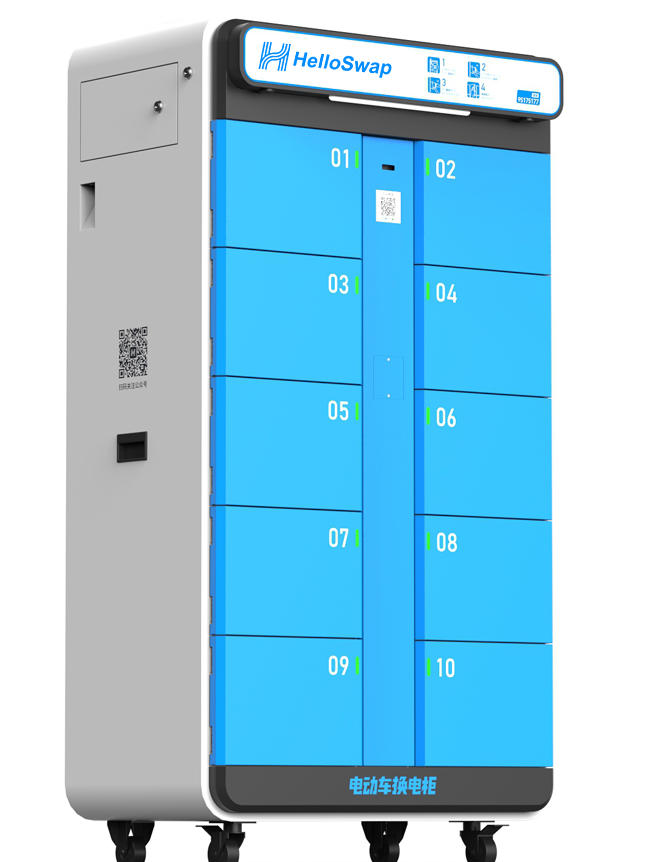
Ultra-fast 6–15 second swaps eliminate multi-hour charging conflicts with peak earning periods entirely.
Modular 5–12 slot cabinets serving dozens of riders hourly without congestion or queue waiting.
Centralized battery management with optimized charging rates and temperature control extends lifespan to 1,500+ cycles.
Real-time thermal monitoring prevents overcharge, thermal runaway, and fires through cloud diagnostics and per-slot systems.
Continuous health diagnostics automatically isolate degraded batteries before riders receive them safely.
Food delivery platforms requiring continuous operations during 11 AM–8 PM peak periods.
Express logistics networks maintaining maximum vehicle availability without backup fleet inventory.
Shared e-bike systems requiring 24/7 fleet readiness without manual battery replacement labor.
Data Support: Delivery platforms operating battery swapping networks report 15–20% more daily orders per rider versus charging-dependent fleets significantly.
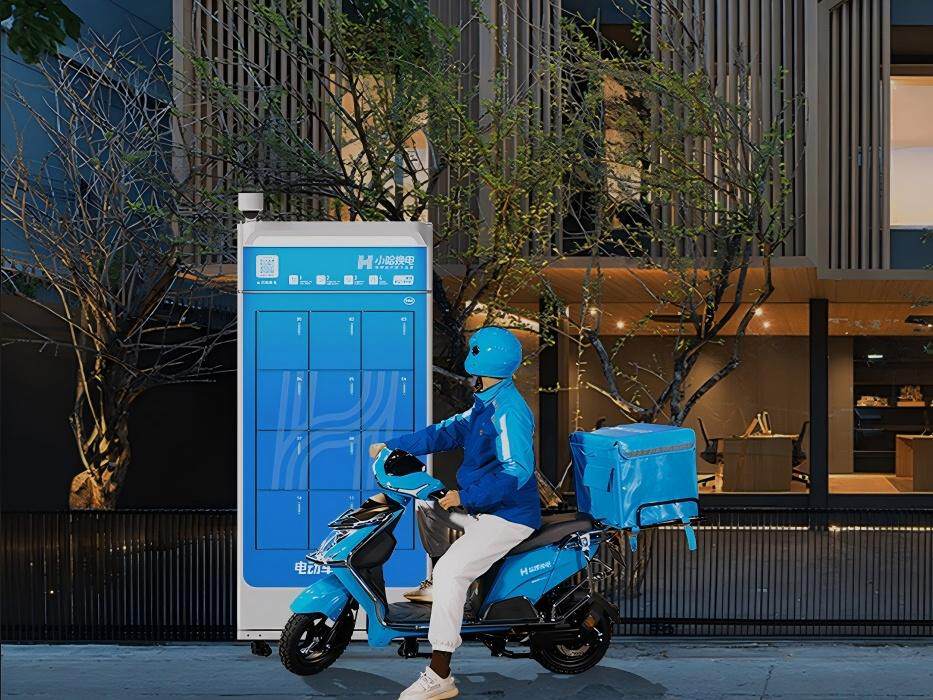
Swapping eliminates 3–7 hour charging downtime forcing riders to choose between lost earnings or insufficient range. Instant 15-second exchanges enable riders to complete 15–20% more deliveries per shift, directly boosting daily income.
Standard batteries (1.5–3 kWh) limit daily range to 40–60 km, forcing 100+ km route riders to accept charging breaks or unsafe battery thresholds. On-demand swapping provides continuous long-distance operations within single shifts.
Battery swapping cabinets employ industrial-grade thermal management, independent per-slot fire suppression, and continuous cloud diagnostics. Automatic safety isolation prevents unauthorized modifications and degraded batteries from reaching riders.
Optimized centralized charging extends battery lifespan substantially compared to unmanaged user charging. Off-peak grid charging during periods of renewable energy abundance supports urban decarbonization while reducing operational electricity costs.
HelloPower & HelloSwap deployed a comprehensive two-wheeler energy infrastructure project in Bangkok, Thailand, establishing 200+ battery swapping cabinets and 10 integrated service stations within six months to address urgent market demand.

Digital Operations Hub
A unified digital platform integrates the entire operational workflow, including vehicle rental booking and return, vehicle sales order tracking, real-time battery swapping cabinet monitoring, and electricity billing and settlement. Users manage all scenarios via the mobile app, while offline service stations provide seamless coordination. This online–offline integration significantly reduces labor costs and improves service efficiency.
Intelligent Dispatching
Leveraging Bangkok's traffic heatmaps, service station battery inventory, and vehicle rental and battery swap order density, the system dynamically allocates battery replenishment and vehicle deployment. This enables "nearest-service, zero-wait energy replenishment," improving user experience while maximizing per-station profitability.
Integrated Service Stations
HelloPower & HelloSwap service stations function as one-stop service hubs for electric two-wheelers, combining battery swap cabinet operations, new vehicle display and sales, rental vehicle maintenance, and emergency power sales. System-level data integration across modules simplifies operations and creates diverse revenue channels.
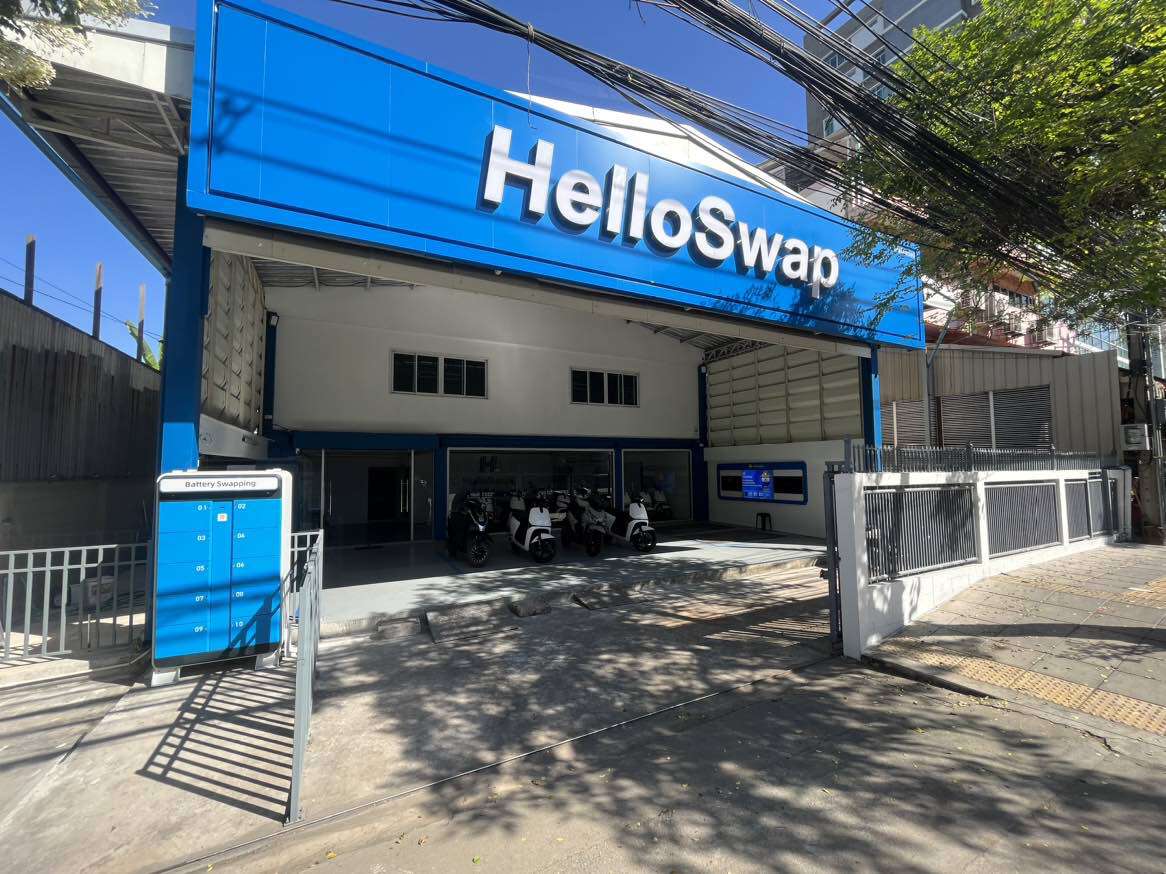
With 200+ battery swap cabinets forming the network and 10 service stations as core hubs, the project achieves 90% coverage of Bangkok's key commercial districts, transportation hubs, and residential areas, establishing a "3-minute energy replenishment + 5-minute vehicle access" service radius.
Powered by HelloPower & HelloSwap's core battery swap technology, the average battery swap time is just 15 seconds, achieving a 98% overall user satisfaction across the full-service ecosystem spanning battery swapping, vehicle rental, vehicle sales, and maintenance.
The standardized station construction workflow, combined with the intelligent operations system, significantly reduces upfront investment and operational barriers for partners of HelloPower & HelloSwap, enabling rapid scaling and sustainable, profitable growth.
Backed by Hello Inc., Ant Group, and CATL, HelloPower & HelloSwap delivers proven expertise in two-wheeler energy solutions and network operations. Partners gain a scalable, low-risk model that simplifies deployment, reduces operational complexity, and supports steady growth. Collaboration enables faster market entry, efficient network management, and multiple revenue opportunities—without the capital and operational burdens of traditional charging stations.
For urban e-bike riders and delivery fleets, the evidence is clear: battery swapping delivers faster energy replenishment and operational continuity that traditional charging cannot match, directly boosting productivity and profitability.
With growing global adoption in commercial two-wheeler operations, HelloPower & HelloSwap offers proven deployment strategies and full operational support. Reach out today to explore tailored network solutions and financial projections.
Yes. Individual riders can pay per swap, while delivery fleets can use monthly or quarterly subscriptions for unlimited swaps and predictable costs.
Batteries are protected with cloud-based pre-swap checks, intelligent thermal management, and smart BMS, preventing overcharge, overheating, and thermal runaway.
All common two-wheeler electric models, including e-bikes and e-scooters with dual-interface batteries, can swap batteries without modification, ensuring quick adoption.
Batteries support 1,200+ cycles with ~80% remaining capacity, sufficient for 3–5 years of use; manufacturers handle testing, repair, and replacement under warranty.
Yes. Services include dedicated swap station layouts, tailored subscription plans, and API integration for streamlined fleet management.
Contact Us
hellopowerglobal@hellobike.com
Location
2F, Building 1, No.898 XiuWen Road, MinHang District, Shanghai, China
Copyright © 2024 福建宁德惠智无限科技有限公司 All Rights Reserved. 闽ICP备2023025900号-3.


