
Battery Swapping Cabinet vs. Traditional Charging: Which Is Better for Urban Riders & Delivery Fleets?
2025-12-23
For electric two- and three-wheeler fleet operators powering the urban logistics boom, traditional charging creates a critical bottleneck: downtime. Waiting hours to recharge is simply not an option. Smart battery swap stations replace slow energy transmission with the rapid exchange of the battery itself. HelloSwap offers an integrated ecosystem that eliminates range anxiety and maximizes vehicle uptime for profitable, non-stop operations.
A smart battery swap station is an intelligent energy infrastructure designed to automate refueling for electric two- and three-wheelers. Unlike standalone charging piles, it is a networked hub that manages a localized inventory of standardized batteries, ensuring they are charged, cooled, and ready for immediate deployment.
IoT + Cloud-Based Intelligence: The station functions as an edge computing node, connecting physically to batteries while communicating with a central cloud platform to verify user credentials and log transaction data in real-time.
Fully Automated Mechanical Exchange: Utilizing precise locking mechanisms, the system enables a "touch-and-go" process where cabinet doors open automatically upon authentication, requiring no staff intervention.
App-Driven Operation: The entire interaction from locating a station and reserving a battery to payment is managed via a mobile app, creating a frictionless user experience.
Comprehensive Health Monitoring: Internal systems continuously monitor the State of Health (SOH), temperature, and voltage of every pack, ensuring only safe, high-performance batteries are dispensed.
Closed-Loop Data Ecosystem: Seamless data flow between the battery, vehicle, and operator dashboard enables precise asset tracking and inventory optimization.
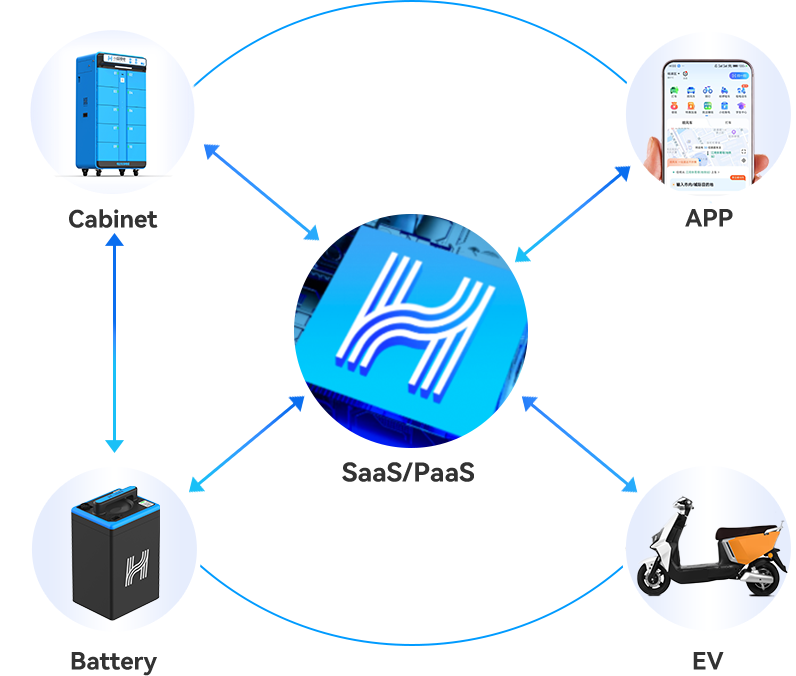
While swapping faces standardization hurdles in passenger cars, it is the perfect fit for light electric vehicles. Their physical characteristics and operational patterns make swapping the most logical energy solution.
Explosive Growth in Short-Haul Travel: Urban centers see massive demand for instant delivery and ride-sharing, creating high-frequency, short-distance travel that drains batteries quickly.
Overcoming Battery Capacity Limits: To maintain agility, onboard batteries are small (1.5kWh–3kWh). Swapping compensates for this limited range by allowing unlimited daily mileage through quick exchanges.
Superior Time Efficiency: For delivery riders, swapping is significantly faster than even DC fast charging, eliminating the need for long breaks during peak earning hours.
Minimal Land Footprint: A swap cabinet typically occupies less than two square meters, roughly the size of a vending machine, making it easy to deploy in crowded city centers where parking is scarce.
True 24/7 "Non-Stop" Operations: Unlike charging stations blocked by slow-charging vehicles, swap stations provide a constant buffer of fully charged batteries, supporting round-the-clock fleet operations.
To deliver a safe, reliable, and scalable service, a modern swap station relies on a stack of advanced technologies working in harmony.
The physical cabinet is engineered as a robust, outdoor-rated safe for lithium batteries, withstanding harsh conditions while performing thousands of precise mechanical operations.
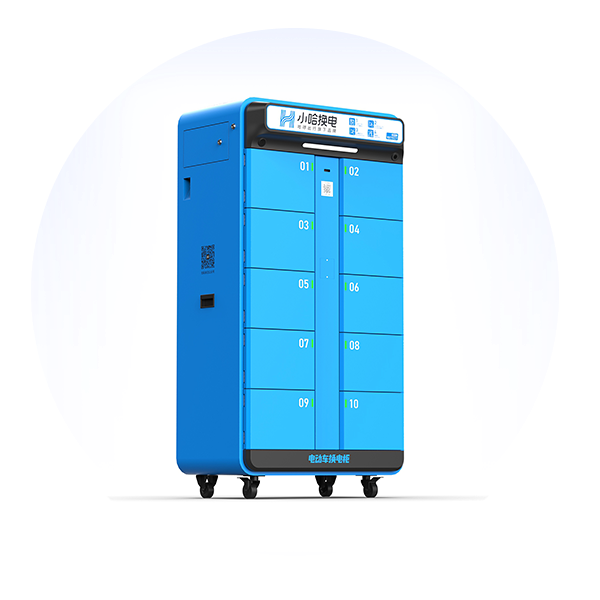
Automated Mechanical Architecture: High-precision sensors detect battery insertion, triggering automated locking and charging protocols only when the battery is correctly seated.
Scalable Modular Design: The architecture supports modular expansion, allowing operators to start with a compact 4-slot or 8-slot unit and add more modules as local swap demand increases.
Multi-Layer Safety Protection: Cabinets employ multi-layer electrical and thermal safeguards, including real-time temperature monitoring, intelligent fault detection, and IP-rated waterproofing to prevent thermal runaway and outdoor hazards.
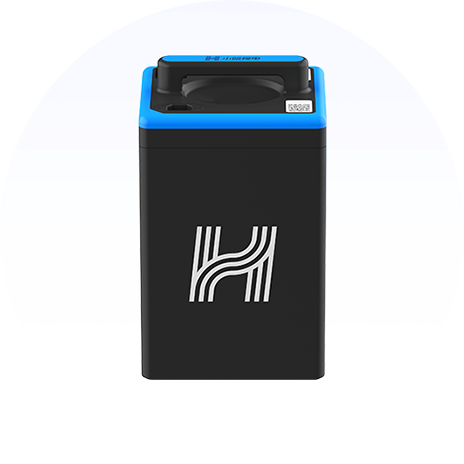
Every battery is a "smart" asset equipped with its own communication module, turning passive storage into a trackable digital asset.
Unique Digital Identity: Each battery carries a unique ID (RFID/NFC), allowing the system to bind packs to specific users for precise accountability.
Lifecycle Traceability: The IoT system tracks the battery's journey from manufacturing to retirement, providing crucial data for residual value assessment.
Dynamic Asset Control: Operators can remotely lock or disable batteries if theft is detected or payment defaults occur, significantly reducing asset risk.
The "brain" of the operation resides in the cloud, where intelligent algorithms optimize energy flow across the city network.
Demand Forecasting: Algorithms analyze historical usage and weather to predict peak demand, advising operators on proactive inventory rebalancing.
Smart Charging Strategies: The system prioritizes charging based on estimated pick-up times, using optimal currents to extend battery lifespan rather than always charging at maximum speed.
Availability Assurance: Real-time monitoring in the app guides riders to stations with available batteries, preventing empty-cabinet situations.
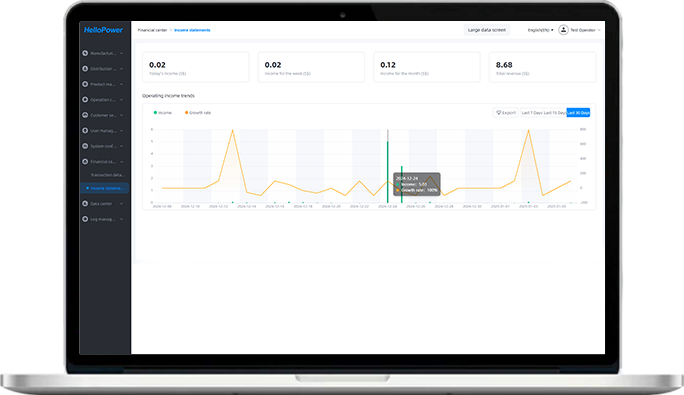
A centralized dashboard provides operators with a comprehensive view of business performance, turning data into actionable insights.
Visualized Network Insights: Visualizing rider density and station utilization helps operators identify the most profitable locations for new deployments.
Proactive Asset Maintenance: The platform automatically flags underperforming cabinets or batteries showing early signs of degradation, enabling maintenance before service disruption.
When comparing battery swapping to traditional plug-in charging (both slow home charging and public fast charging), the operational benefits for commercial fleets are overwhelming.
A typical swap takes less than 30 seconds—comparable to scanning a QR code. This near-instant turnaround fundamentally changes the workflow for high-frequency users. Instead of losing an hour to charging during peak revenue windows, riders are back on the road in under a minute.
Downtime kills profitability. Traditional charging forces vehicles to be non-operational for 15–20% of the day. Swapping reduces this to near zero, allowing fleet operators to purchase fewer vehicles to do the same amount of work, significantly improving capital efficiency.
Swapping eliminates "slow charging anxiety" and removes the need to secure chargers and cables, which may be stolen. Furthermore, finding a spot for a cabinet is easier than finding parking and wiring for ten separate charging bikes, and the fast turnover prevents queueing congestion.
User-managed charging can be erratic. Riders may overcharge or charge immediately after a hot ride. In a smart station, batteries are managed in a controlled environment. This centralized care, including temperature management and optimized charging curves, can extend battery cycle life by 20–30%.
Swapping enables Battery-as-a-Service (BaaS), separating vehicle ownership from the energy source and altering the economics of adoption for electric two- and three-wheelers.
The battery is the most expensive component of an electric vehicle, often accounting for 30–40% of the total cost. With BaaS, users buy the vehicle "naked" (without the battery) at a much lower price, making high-quality electric two- and three-wheelers price-competitive with cheap combustion-engine alternatives.
BaaS transforms energy costs from a capital expense (buying a battery upfront) to a flexible operating expense. This aligns costs with actual revenue generation for commercial users.
Pay-Per-Swap: Ideal for casual users or freelancers who do not ride every day.
Monthly Subscription: Perfect for full-time gig workers who need predictable, flat-rate energy costs.
Mileage-Based: A fair model for logistics companies that want to track cost-per-kilometer precisely.
Enterprise Packages: Custom solutions for large fleets comprising hundreds of vehicles.
For OEMs and fleet managers, BaaS creates a recurring revenue stream. Instead of a one-time hardware sale, they build long-term customer relationships. The constant data connection also provides deep insights into user behavior for better credit risk assessment and targeted marketing opportunities.
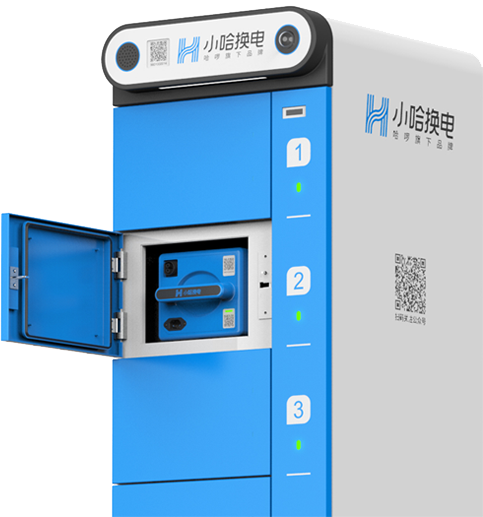
Smart battery swap stations are versatile, but they deliver the highest value in high-intensity, commercial scenarios where efficiency is paramount.
This is the "killer app" for battery swapping. Riders for platforms like UberEats or DoorDash often cover 100km+ daily and cannot afford downtime. Swapping provides all-weather reliability, ensuring deliveries never stop due to rain or low battery. Flat-rate subscriptions help manage monthly expenses more predictably compared to fluctuating fuel prices.
Dockless e-scooter and e-bike rental companies used to spend huge sums on manual battery replacement or collecting bikes for charging. Swapping allows a smaller operations team to simply drive around with fresh batteries and swap them in the field. This drastically cuts the labor hours while keeping vehicles available for rent longer.
Police patrols, campus security, and park maintenance vehicles need to be ready at a moment's notice. A swap station at the depot simplifies asset tracking across different departments and ensures that the entire fleet is 100% ready for every shift, while supporting decarbonization goals with clean electricity.
Last-mile logistics is increasingly moving to electric three-wheelers for their cargo capacity. These heavy vehicles consume more power and are difficult to park near standard outlets. Swapping allows drivers to refuel mid-route without unloading cargo, supporting high-throughput operations and dynamic delivery schedules.
Smart battery swap station is an infrastructure investment with compelling unit economics, driven by higher throughput and lower land costs than large-scale fast-charging stations.
Hardware: The cost of the cabinet itself, which is generally lower than high-power DC fast charging infrastructure.
Cloud Platform: Licensing fees for the software that runs the network.
Battery Assets: The initial stock of batteries (usually a ratio of 1.5 batteries per vehicle served).
Site Operations: Rent, electricity connection, and routine maintenance.
Safety Compliance: Investment in fire suppression and safety monitoring systems.
BaaS Service Fees: The core recurring revenue from subscriptions.
Swap Transaction Fees: Additional revenue from heavy or casual users.
Data Monetization: Selling fleet efficiency insights to logistics companies.
Vehicle Sales: Using the network availability to sell compatible EVs.
Advertising: Utilizing cabinet screens as digital billboards in high-traffic areas.
Understanding the ROI: For high-utilization fleets, smart battery swap stations can significantly shorten the payback period compared to traditional charging.
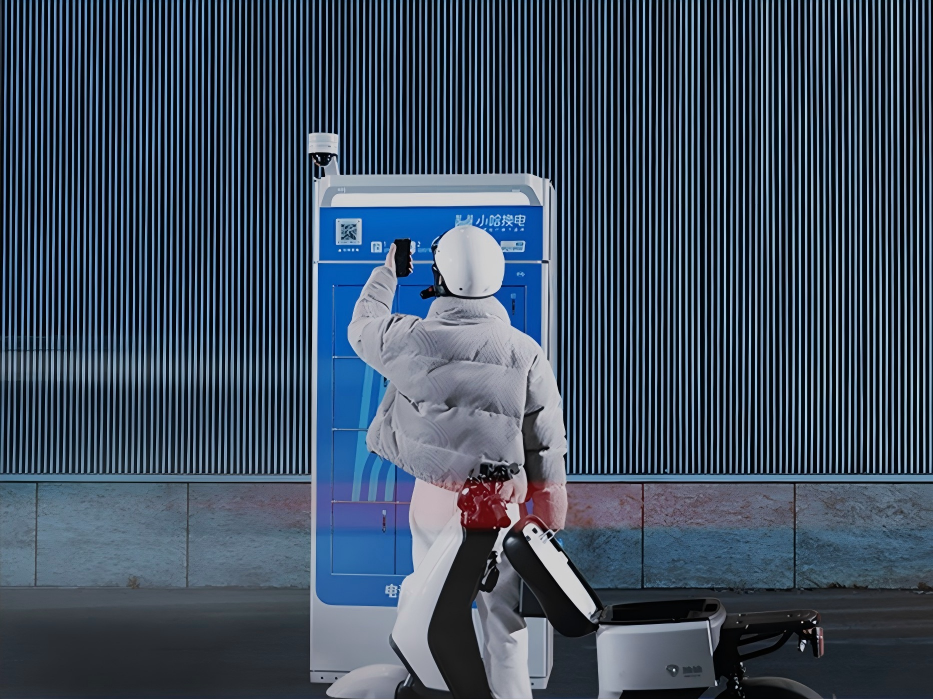
Selecting a smart battery swap station supplier means choosing a long-term partner for your energy network. The market is flooded with options, but few offer the reliability needed for a commercial-grade operation. You should:
Look for End-to-End System Integration:
Avoid isolated hardware. Choose a partner offering a turnkey closed-loop solution—cabinet, battery, vehicle, and cloud—to ensure data stability and system compatibility.
Verify Proven Operational Experience:
Building hardware is easy; running networks is hard. Select a supplier with proven large-scale operational experience to avoid costly trial-and-error pitfalls.
Assess Customization and Scalability:
Your partner must support modular hardware for easy expansion and offer localization services, from payment gateway integration to custom app interfaces.
Demand Rigorous Safety Standards:
Safety is non-negotiable. Ensure hardware features active fire suppression and redundancy. The BMS must be sophisticated enough to detect anomalies early.
Evaluate After-Sales and Localization:
Value a partner providing OTA updates, spare parts, and training. Local maintenance capability is far more critical than just shipping containers.
Top established suppliers like HelloSwap—a joint venture backed by mobility giant Hello Inc., global battery leader CATL, and fintech pioneer Ant Group—combine world-class battery R&D, digital technology, and on-the-ground operational teams, eliminating trial-and-error for new entrants.
The battery swapping industry is moving from pilots to scaled infrastructure, creating a massive window of opportunity for early movers to capitalize on these trends:
Rapid Urban Network Densification: Networks are densifying fast in delivery corridors. Investing now secures prime, high-traffic locations at competitive costs.
Policy Pushing BaaS Standardization: As policies drive OEMs toward BaaS, early infrastructure investors gain immediate access to a rapidly expanding user base.
Multi-Vehicle Compatibility: Standardized batteries now fit multiple vehicle models, maximizing cabinet utilization and multiplying potential revenue for asset owners.
Battery Asset Protection: Advanced monitoring turns health data into insights, extending asset lifespan and protecting capital from premature degradation risks.
Micro-Energy Hub Integration: Stations integrating solar and storage act as micro-grid hubs, slashing electricity costs and unlocking grid-service revenue.
The transition to electric two- and three-wheelers is inevitable, and smart battery swap stations solve the "impossible triangle" of costs, downtime, and safety. Whether you are a fleet operator looking to cut operational expenses or an infrastructure investor seeking high-yield green assets, HelloSwap provides the proven end-to-end solution to lead this revolution.
Ready to build the future of urban energy? Contact us today to receive a personalized solution with ROI analysis or book a demo of our smart swap system.
Contact Us
hellopowerglobal@hellobike.com
Location
2F, Building 1, No.898 XiuWen Road, MinHang District, Shanghai, China
Copyright © 2024 福建宁德惠智无限科技有限公司 All Rights Reserved. 闽ICP备2023025900号-3.


